Why most sleep trackers don't tell you about your breathing.
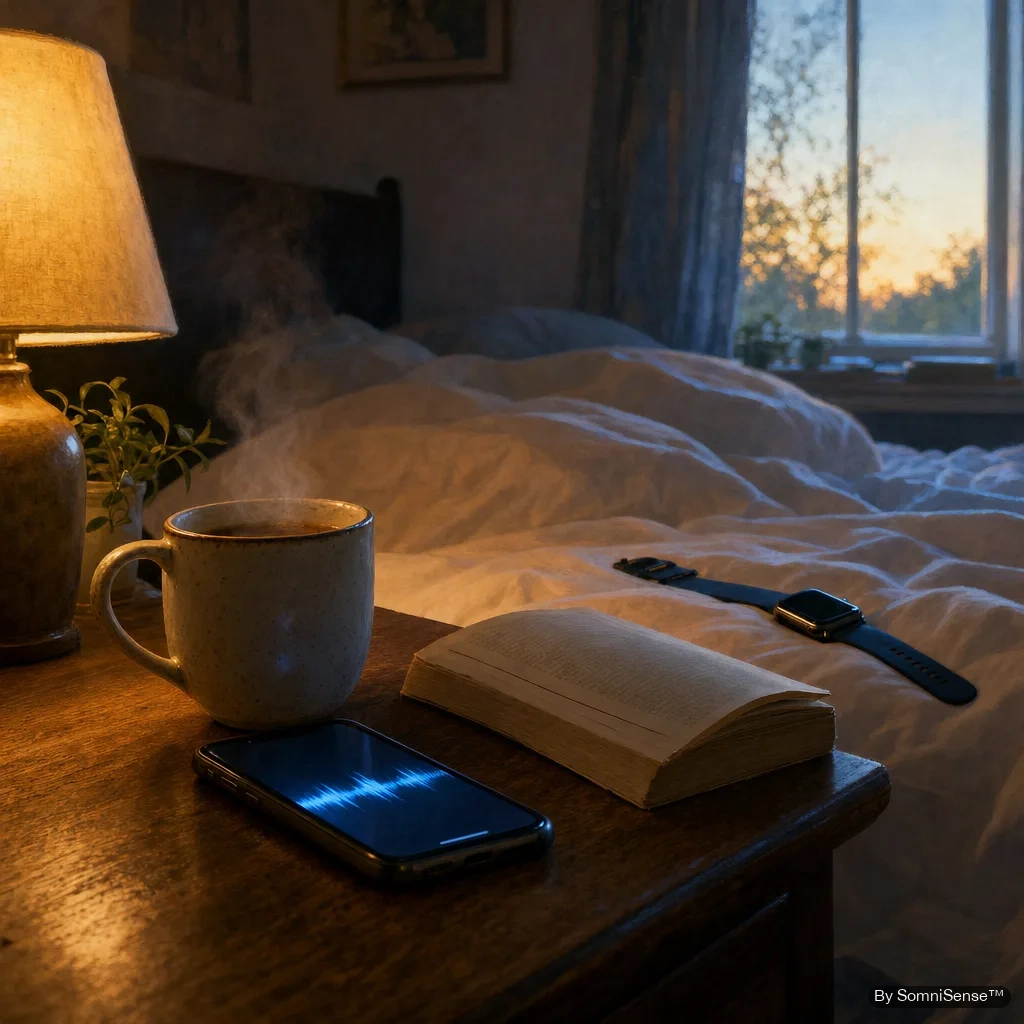
I get this question often enough that I want to write the long version of the answer.
"My Apple Watch / Whoop / Oura tracks my sleep and gives me a score. Why doesn't it just tell me about my breathing too?"
The short answer is: because it can't, in the way you'd want it to. Not because of the company. Not because of the algorithm. Because of where it's worn.

Wrist sensors can't hear the room
Every consumer wearable that goes on your wrist or your finger picks up the same family of signals: heart rate, heart rate variability, skin temperature, motion, sometimes blood oxygen. Those are the things you can measure through skin contact with reasonable accuracy. From those signals plus a clever model, you can infer a lot — sleep stages, recovery, restlessness, illness onset.
What you can't do is hear what was happening in the room. The snoring volume. The eleven-second stretch where breath stopped at 3:47 a.m. The gasp that ended it. None of those are physical signals reaching the wrist. They're acoustic. The wrist is the wrong place to listen.
This isn't a knock on wrist devices. They're doing the job they're designed for, and they're doing it better than anything that came before. The point is just that "tracking sleep" and "tracking breathing during sleep" are not the same problem, and the latter needs a different sensor in a different place.
What companies that do try acoustic detection are working with
A few large wearable makers have started flagging "possible breathing disturbance" patterns from blood-oxygen drops on the finger or wrist. Apple Watch has a sleep apnea notification feature based on overnight oxygen variability. Oura uses respiratory rate plus oxygen to flag possible apnea events. Both run their analysis on-device or in the phone after you wake up, and surface a "we noticed something" prompt the next day.
I'm a long-time Apple Watch user. I'm a long-time Oura user. I think both features are real and valuable. The blood-oxygen channel is genuinely good at catching the desaturation that follows breathing pauses — that's a sound physiological signal. If your watch or your ring tells you something might be off, take that seriously.
But the limit of that approach is what it can see. Oxygen drops are downstream of breathing events. They tell you "something happened" without showing you the something. They can't tell you whether you snored loudly through it, gasped, or paused silently. They can't let you press play on the moment.
The whole reason I built SomniSense the way I did is that, after enough nights of being told "your sleep was disturbed" without knowing what disturbed it, I wanted to hear the disturbance. The data is more useful when you can verify it.
Why "we cover everything" is a hard product to build well
The other reason most trackers stop short of acoustic breathing detection is that the bigger you make a product's scope, the harder each piece is to do well. The major consumer device makers cover heart, respiratory rate, oxygen, sleep stages, fitness, calories, recovery, ECG, fall detection, sometimes more. Doing all of that and adding "high-confidence acoustic apnea detection with audio playback per event" is a bigger lift than it looks, and it raises regulatory questions a $500 wristworn device generally tries to avoid.
I went the other way deliberately. SomniSense does one thing — it listens to your breathing, classifies what it hears, and lets you press play on any event. That's the entire scope. We're not trying to also tell you whether you should run today, or how your VO₂ max is trending, or how many calories you burned. The wrist devices have those covered. We just wanted to build the listening layer most of them, by design, can't.
That trade-off is what people sometimes mean when they say "Apple does everything but isn't best at any one thing." That isn't a critique of Apple — it's the normal cost of broad scope. Specialization in narrow domains is what small teams can offer in exchange for the things they can't.
So which one should you use?
Both, if you have a wearable already. They answer different questions. Your watch or your ring tells you whether your nervous system recovered, whether your stages were normal, how restless you were. SomniSense tells you what your breathing did. The picture is more complete with both than with either alone.
If you don't have a wearable, you don't need one to start with sleep monitoring. The phone you already own, on the nightstand, with SomniSense running, gives you the breathing data layer without any new hardware. The wearable can come later if you decide you also want the recovery and fitness layers.
Read next
If you'd rather see your own night than read about someone else's —
It's free on both stores. Put the phone on the nightstand tonight; the report is there when you wake up.
First 7 days of Pro are free · then $7.99/mo or $49.99/yr · cancel before day 8 and you pay nothing.