How accurate is a phone at this, really?
A phone with one microphone, no sensors, measuring your breathing at night. The honest answer involves more than one number — and one of them is a lie if you read it alone.
Read article →BLOG · WRITTEN BY THE TEAM, NOT A CONTENT FACTORY
Two kinds of articles, mostly: Lab Member experiments that show what one person's data actually looked like, and plain-English foundational pieces — the kind I wish someone had handed me two years ago. No SEO listicles. No "10 sleep hacks." If something is here, I think it's worth your 5-7 minutes.
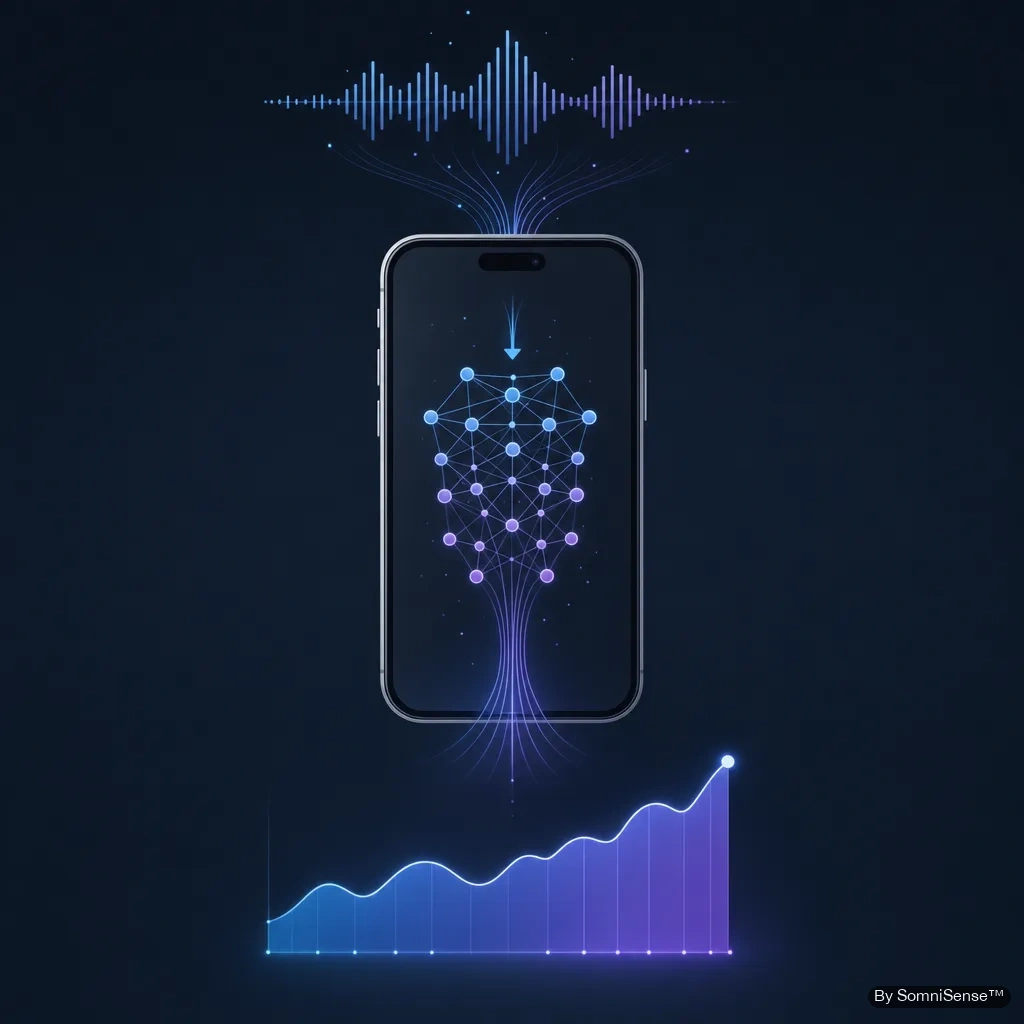
A phone with one microphone, no sensors, measuring your breathing at night. The honest answer involves more than one number — and one of them is a lie if you read it alone.
Read article →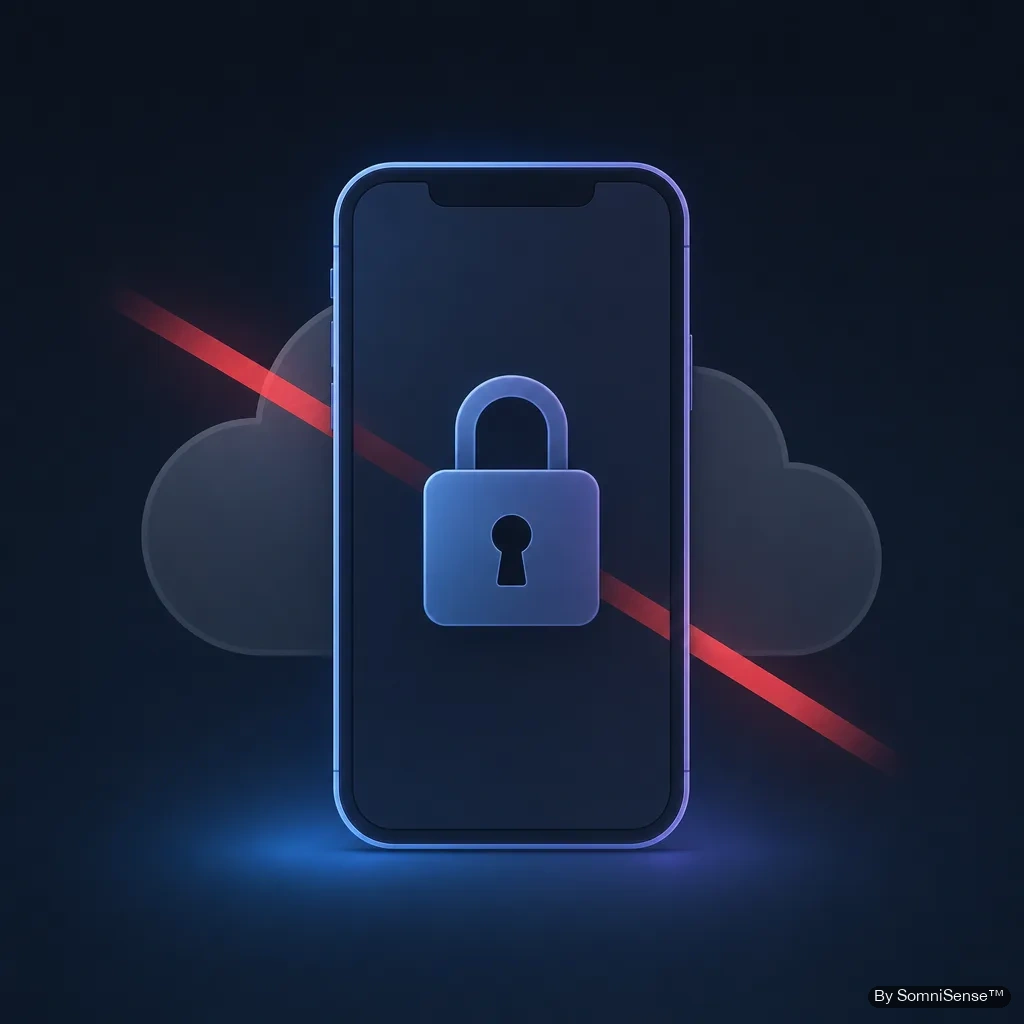
Recording audio all night sounds invasive — until you realize nothing gets sent anywhere. Why SomniSense runs entirely on your phone, and why that's an engineering decision, not a slogan.
Read article →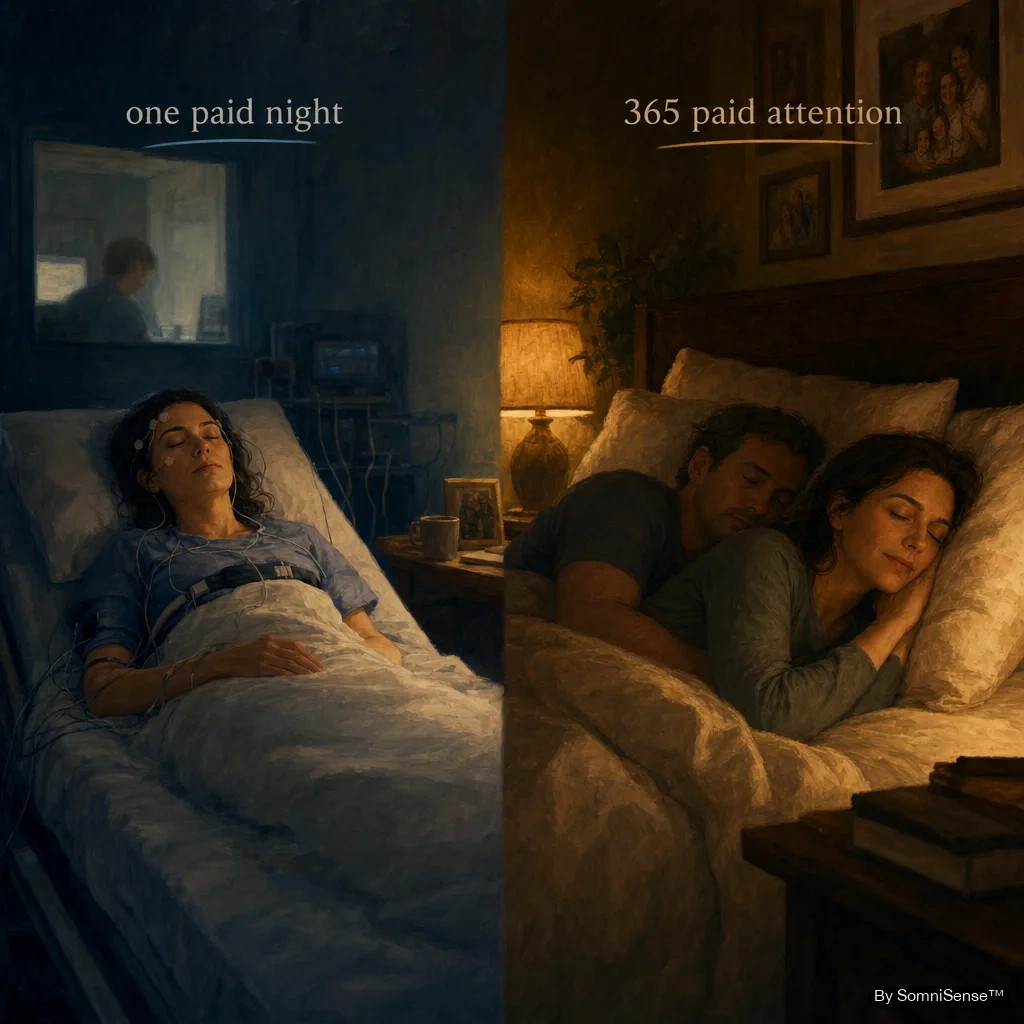
Sleep apps love the phrase. Most don't tell you what it means — or how easy it is to fake. How a validation can be trustworthy or hollow, in plain language.
Read article →
The wind-down feeling and the actual quality of sleep are not the same. Here's what data tends to show on nights with cannabis or CBD edibles — and why people are surprised.
Read article →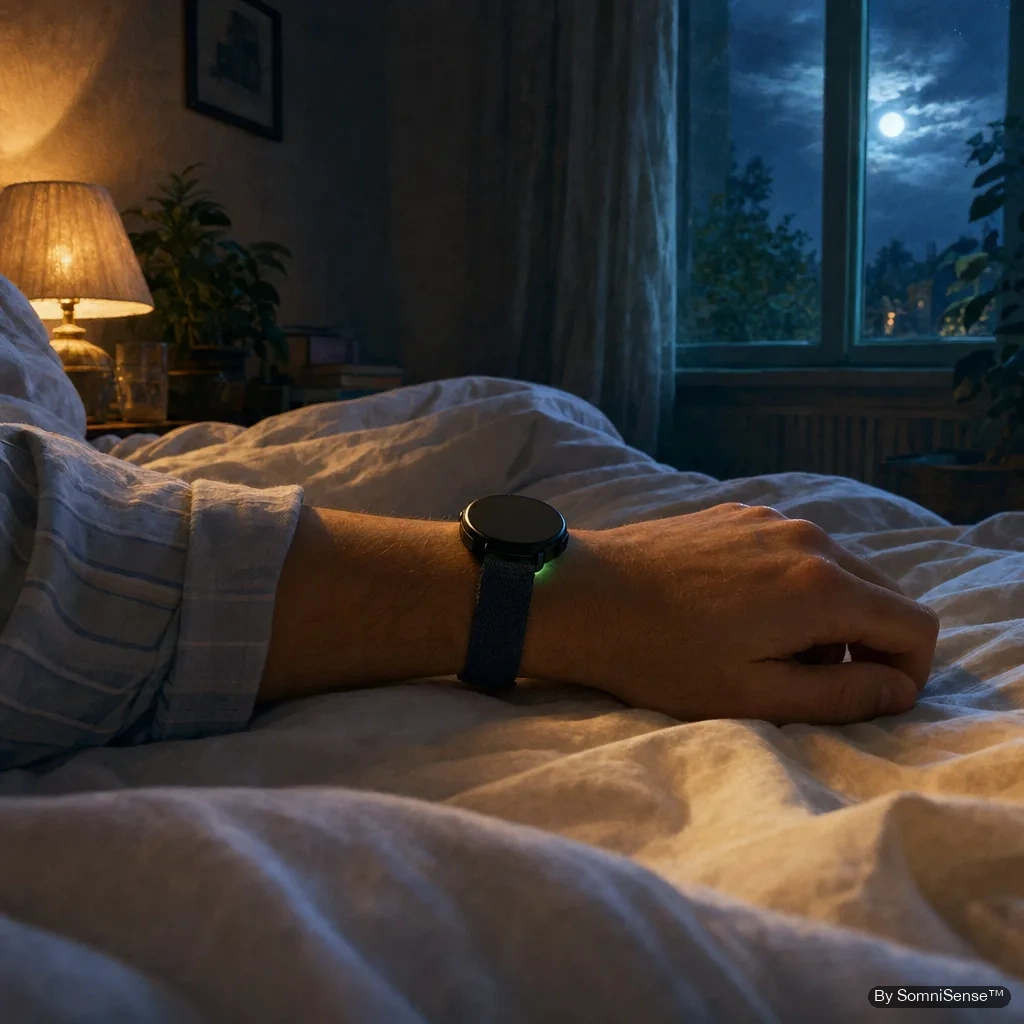
Sleep stages on a wrist sensor are an honest estimation, not a clinical reading. Here's what the watch is doing under the hood, what it gets right, and where the gaps are.
Read article →
Heart rate variability tells you whether your nervous system recovered. Breathing events tell you whether your airway stayed open. Two lenses on the same night.
Read article →
The boring physiology that decides whether tonight will go well: your body has to drop in temperature, lower its cortisol, and let muscles recover.
Read article →
Time in bed is not the same as restorative sleep. Eight hours of fragmented sleep can leave you as foggy as five. Here's how the gap shows up in the data.
Read article →
The Saturday-morning sleep-in is supposed to repay the sleep debt. The data tends to disagree. Here's what's usually happening on those long weekend mornings.
Read article →
A high sleep score and a high breathing-event count aren't a contradiction. They're two different measurements of the same night.
Read article →
Breathing pauses cluster in the second half of the night for a specific physiological reason. Here's why, and why looking only at your average BRI hides it.
Read article →
Loudness is the easiest thing to measure and the wrong thing to optimize for. The kind of snoring matters more than how loud it is.
Read article →
Wrist trackers measure what touches the wrist. They can't hear the room. That's not a failure — it's a physical limit. Here's the honest version.
Read article →
A second SleepWell Lab™ Member's experiment — same workout, two timings. The two-hour shift mattered more than she expected.
Read article → A common misread of SomniSense data: "my snore loudness dropped, so I must be sleeping better." Sometimes yes. Sometimes the opposite.
Read article →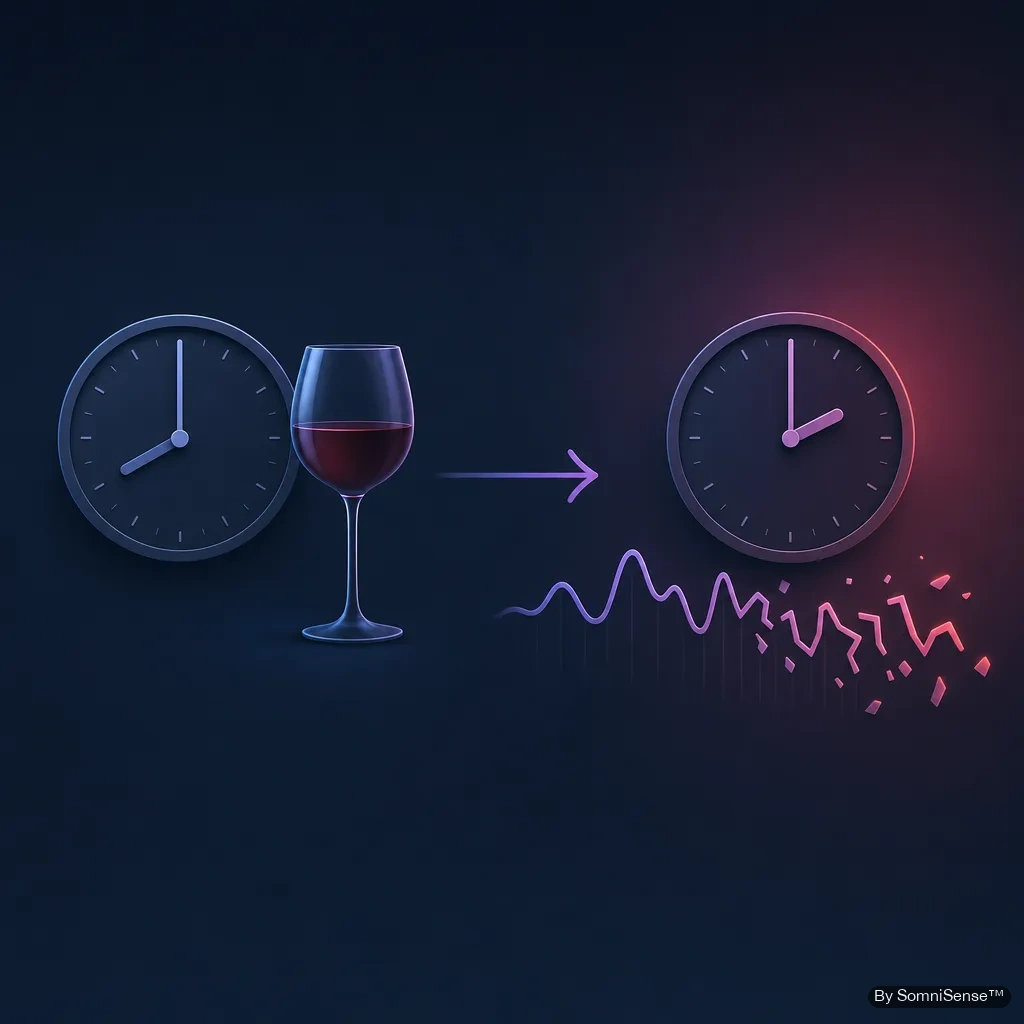
A SleepWell Lab™ Member ran a 14-night experiment: half nights with one glass of red wine, half without. The data was unambiguous.
Read article →
You fall asleep faster. You feel relaxed. You don't remember waking up. All true. None of those mean you slept well.
Read article →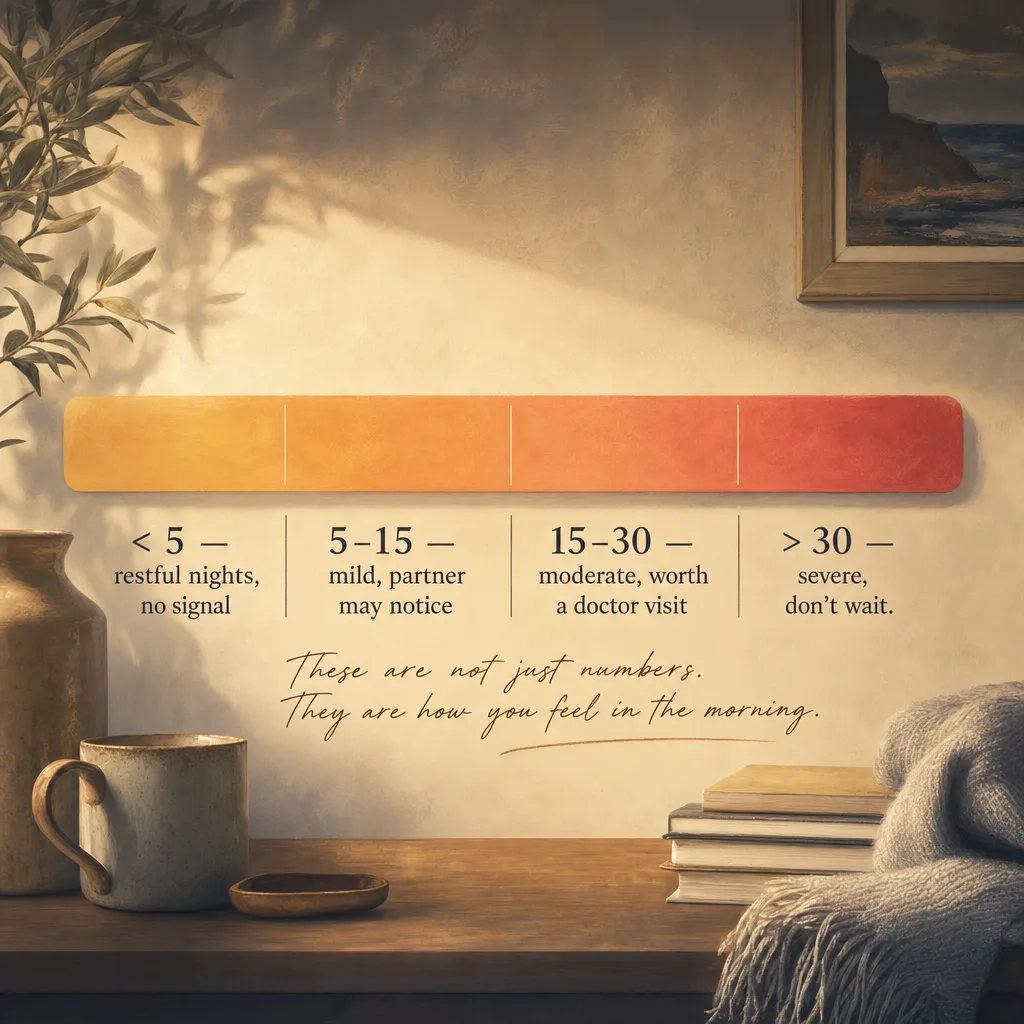
BRI is the per-hour event-rate scale we report. It's the same scale clinicians call AHI, but I want to be specific about what it is and isn't.
Read article →
If you're new to all of this, start here. The version I wish someone had given me before I spent two years thinking I was just a heavy sleeper.
Read article →