"I slept eight hours" is a lie your phone tells you.
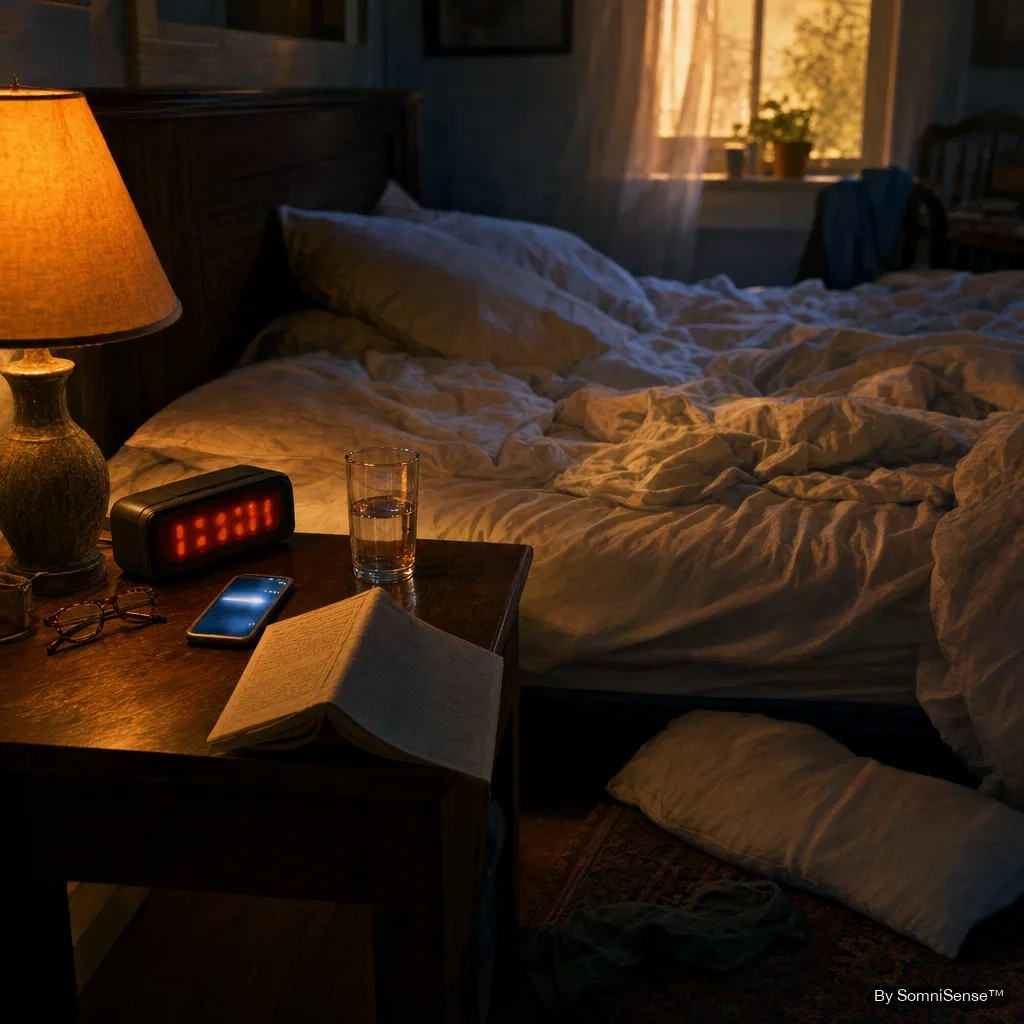
The morning version of this experience: you went to bed at 11. The phone says you got up at 7. Eight hours, technically. You stand up, walk to the kitchen, and feel like you slept five.
For two years before I built this app, I had this morning four or five times a week. The "I'm just tired today" explanation kept working until it didn't. The actual explanation is something most consumer sleep apps still soft-pedal because it sounds like a downer: time in bed is not the same as restorative sleep, and the gap between them can be enormous.
I want to walk through what's actually happening when 8 hours feels like 5, because once you can see it on data, the morning makes a different kind of sense.

What sleep is actually for, and why fragmentation breaks it
Sleep isn't just unconsciousness. It's an active recovery process organized into 90-minute cycles. Each cycle moves through light sleep → deep sleep (where the body does most of its physical repair) → REM (where the brain consolidates memory, regulates emotion, processes the day).
The deep and REM stages are the ones doing the cognitively important work. They take time to enter and time to develop — you don't get into deep sleep instantly when you close your eyes, and a healthy REM episode might last 20–30 minutes.
Now imagine something arouses you briefly — your airway partially closes for 12 seconds, you take a sharp recovery breath, your brain has a half-second wake-up your conscious memory doesn't store, and you slip back into sleep. That tiny event is called a micro-arousal. It feels like nothing. You might have 30, 50, or 80 of them in a single night without remembering a single one.
Each one of them, though, is a reset. The deep-sleep architecture you were building gets cut short. The REM episode you were entering gets aborted. The cycle restarts from light sleep again. You're still technically asleep, but the recovery work isn't getting done.
What this looks like as a number
The math on a typical night with significant fragmentation goes something like this:
- Hours in bed: 8
- Time actually asleep: 7.4 (some inevitable awake time around sleep onset and morning)
- Cycles attempted: ~5
- Cycles that completed normally: 1–2 in a fragmented night, all of them in a clean night
- Total deep sleep: 30 minutes (vs 90 minutes target)
- Total REM: 60 minutes (vs 90 minutes target)
- Functional restorative sleep: maybe 4 hours of equivalent quality
The phone reports "8 hours of sleep." The body got the recovery of about 4. The morning fog is the body cashing the check that fragmented sleep wrote.
The frustrating part is that this gap is invisible without data. You can be 20 years into this pattern, telling everyone you "sleep 8 hours and still feel tired," and no one — including yourself — connects it to airway events you don't remember having.
Why "just sleep more" doesn't fix it
This is the trap most people fall into. They feel tired, so they go to bed earlier or sleep in on weekends, trying to add hours. If the underlying problem is fragmentation, more hours doesn't help — you just get more of the same fragmented hours. More on why weekend catch-up backfires.
The fix is the opposite direction. Instead of adding hours, find what's causing the fragmentation and remove it:
- Breathing-related fragmentation shows up as elevated BRI on a sleep monitor. It's the most common cause in adults. Side-sleep, weight, alcohol, position therapy, sometimes CPAP — these are the levers.
- Stress / cortisol fragmentation shows up as low HRV and frequent waking, but with a clean BRI. The fix is the wind-down, not the airway.
- Environmental fragmentation — partner movement, noise, light, room temperature. Easier to spot, often easier to fix.
- Substance-related fragmentation — alcohol, caffeine, certain medications. Show up as predictable patterns on tracker data.
You won't know which one applies to you without measuring. Which is, really, the entire point of running data on yourself for two weeks.
What to look for in your own night
If you have a wearable, three signals to watch:
- Wake events / restlessness count. Most wearables count the number of times you woke up. A "good night" is roughly 0–4. A fragmented night can be 15–30, even if you don't remember any.
- Deep sleep duration. Healthy adults should get 60–120 minutes. If yours is consistently under 30, fragmentation is interrupting the architecture.
- Morning HRV. Should rise overnight as the body recovers. If it's flat or worse than the previous evening, recovery didn't happen.
If you have SomniSense too, BRI is the next layer down — it shows you whether the fragmentation has a breathing cause. The combination of "fragmented sleep architecture + elevated BRI" is a clear pattern that points to airway, not stress.
Read next
If you'd rather see your own night than read about someone else's —
It's free on both stores. Put the phone on the nightstand tonight; the report is there when you wake up.
First 7 days of Pro are free · then $7.99/mo or $49.99/yr · cancel before day 8 and you pay nothing.