SYMPTOM GUIDE · LAYER 3 EDUCATION
Why Am I Tired After Sleeping 8 Hours?
Sleeping 8 hours but still tired usually means your sleep is fragmented, not short. Tonight, free, you can hear and see what actually fragmented it — from the phone on your nightstand.
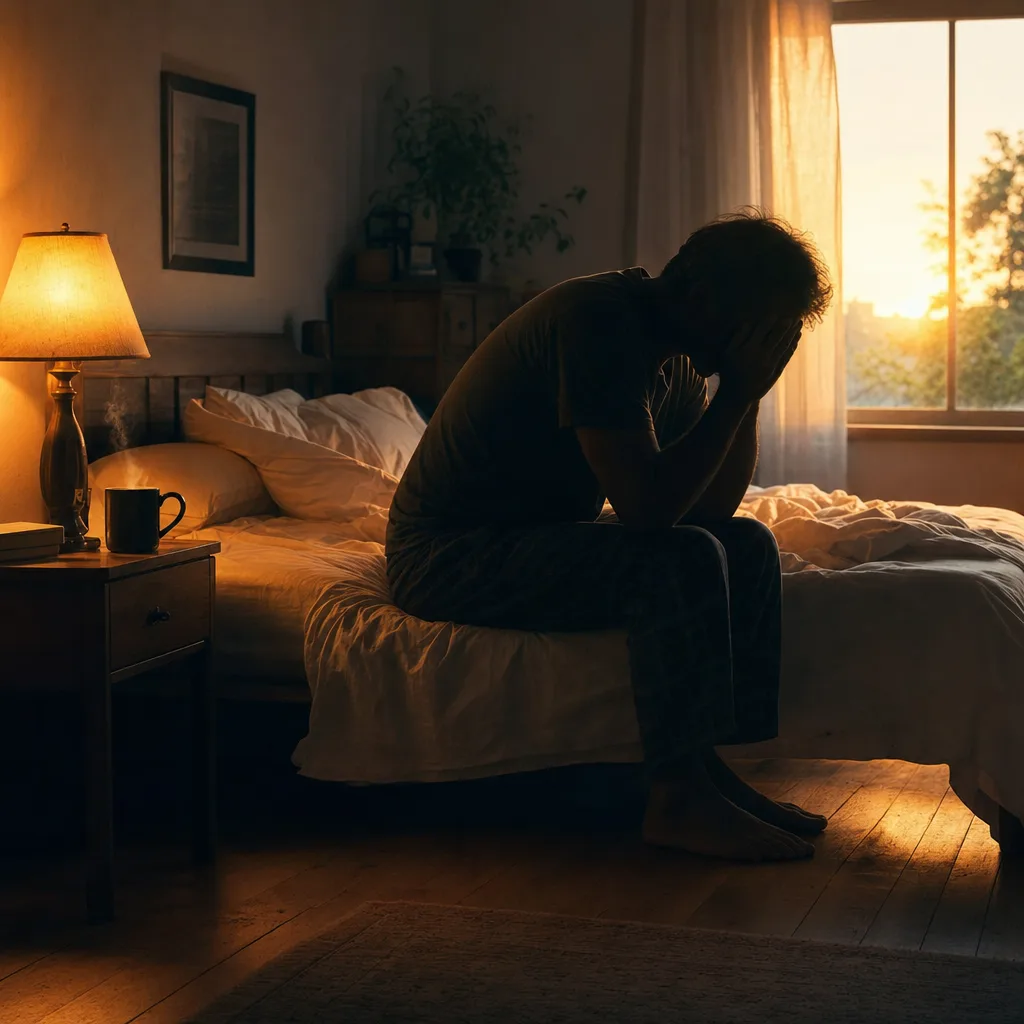
Sleeping 8 hours but still tired usually means your sleep is fragmented, not short. The most common silent culprits are: snoring that disrupts your own sleep architecture, breathing irregularities (clinically called apnea and hypopnea — pauses and shallow breathing) that lower overnight oxygen, and stress/alcohol reducing deep-sleep quality. The fastest way to find out which one applies to you is to monitor a single night with SomniSense and read your Breathing Irregularity Index (BRI) — the same per-hour metric clinicians use in lab settings.
Sleep duration vs sleep quality
You measure hours, but your body measures recovery. A "full" 8 hours that includes 80 micro-arousals, 14 breathing pauses, and disrupted deep-sleep architecture may produce less recovery than a clean 6 hours.
The 4 most common silent causes
- Snoring — even when you don't know you snore.
- Vibrations in airway tissue → micro-arousals → fragmented sleep
- Common signs: dry throat, morning headaches, partner complaints
- Breathing irregularities (clinically called apnea and hypopnea).
- Brief drops in oxygen → sympathetic nervous system spikes
- Common signs: gasping awake, morning brain fog, daytime fatigue
- SomniSense quantifies these as your BRI (events per hour) — the same scale clinicians call AHI
- Lifestyle inputs (alcohol, late caffeine, late meals).
- Alcohol relaxes throat muscles → more breathing events on drinking nights (how much is individual — that's exactly what Lifestyle Lab™ measures for you)
- Caffeine within 8 hours of bed reduces deep sleep
- Sleep position.
- Back-sleeping triples airway collapse risk vs side-sleeping
When should you actually worry?
- You sleep 7–9 hours and still feel exhausted ≥ 4 days/week
- You wake gasping, choking, or with a racing heart
- You have morning headaches
- Your partner has watched you stop breathing
If any two are true for you, that's worth investigating.
What you can do tonight
- Skip the late drink (alcohol effect = within 3 hours)
- Sleep on your side (place a body pillow behind you)
- Elevate your head 30° if congested
- Switch off late caffeine after 2 p.m.
- Run one night of monitoring with a tool like SomniSense
How SomniSense helps — two specific things
▶ See & Hear it (DIFF-2). Tonight, SomniSense gives you a Breathing Irregularity Index (BRI), snoring count and types, AND replayable audio of every event. Hear that 3 a.m. silence. Hear the gasp. Decide if this is "just being tired" or not.
🧪 Test it on YOURSELF (DIFF-1). Over the next 14 nights, tag the factors and improvements you suspect matter for you. SomniSense will surface which ones actually moved YOUR BRI — not the average user's.
Suggested 14-day micro-experiment for this symptom
- Days 1–7: Tag honestly. Don't change anything. Establish baseline.
- Days 8–14: Tag one variable change (e.g., 🛌 Side-sleep + ❌ no late alcohol). Keep everything else identical.
- Day 15: Open Trends → Factor Impact. Compare the two weeks.
If your BRI was already fine, you'll know to look elsewhere (thyroid, mental health, anemia). If it wasn't, you'll walk into a sleep specialist's office with 14 tagged data points and a stack of audio clips — not a hunch. (BRI uses the same per-hour event-rate scale clinicians call AHI, so your specialist can read it directly.)
Common questions
Can stress alone make me tired despite 8 hours of sleep?
Yes, but typically combined with reduced deep sleep. If stress is the only cause, your BRI on SomniSense (the same per-hour metric clinicians call AHI) will look normal.
Could it be a thyroid problem?
Possible. If your BRI is normal and you remain exhausted, ask your primary care doctor for a TSH panel.
How many nights of monitoring do I need?
3 to establish a baseline; 7 to see lifestyle effects; 30 to spot trends.
Will losing weight help?
Population studies suggest a 5-lb weight change can correlate with meaningful BRI/AHI reductions, but the magnitude varies widely by individual. The whole point of the SomniSense Lifestyle Lab™ is to measure YOUR personal effect rather than rely on the average.
I do all the right things. Why am I still tired?
Time to rule out medical causes. SomniSense data is a strong starting point for a conversation with a sleep specialist.
First 7 days of Pro are free · Cancel through the App Store or Google Play before day 8 to avoid the renewal charge.
Read next
What if you could bring a PSG-style report to your doctor next visit?
SomniSense doesn't just track tonight. Every Sunday morning at 7am (your local time), Pro subscribers receive a doctor-ready PDF in your inbox — formatted exactly the way your sleep specialist reads HSAT reports. Print it. Bring it to your appointment. Forward it to your partner. That's how data becomes care.