SYMPTOM GUIDE · LAYER 3 EDUCATION
Why Do I Wake Up with Headaches?
If you wake up with a headache more than a couple times a week — typically a dull, pressing pain on both sides of your head, fading within an hour or two — your sleep is probably the cause. Specifically: how you breathed during it. Tonight, free, you can capture that breathing on your phone — hear it, see it timestamped — and stop guessing.
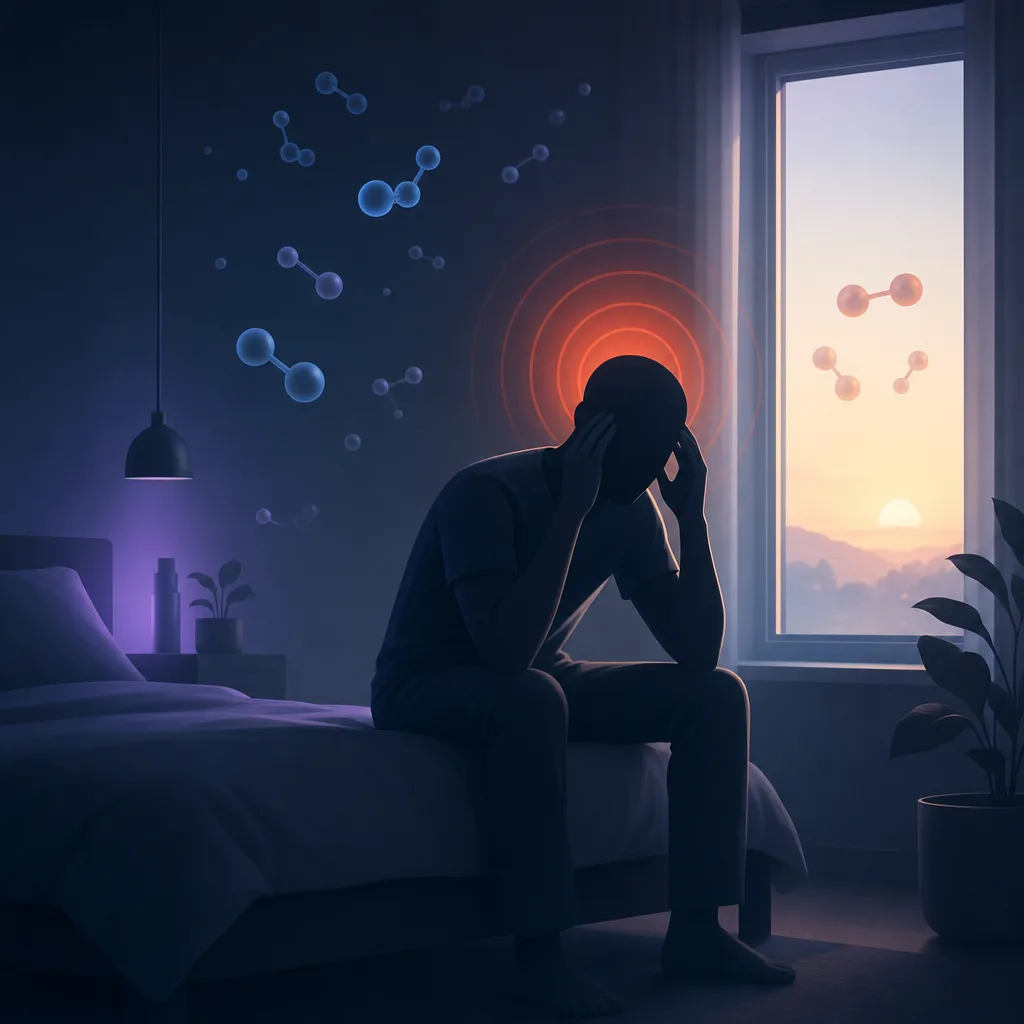
"Morning headache" is a recognized clinical pattern, distinct enough that the International Classification of Headache Disorders gives it a category: sleep apnea headache.
The classic profile:
- Bilateral (both sides), pressing/squeezing quality
- Present on waking, gradually resolves within 30–180 minutes
- Frequency: at least 15 days per month for clinical significance
- Often accompanied by snoring, daytime tiredness, partner reports of breathing pauses
This is one of the most useful sleep symptoms to investigate because the link is so direct: your headache today is largely a function of how your breathing went last night.
The mechanism behind sleep-apnea headaches
The leading hypothesis is CO₂ retention + cerebral vasodilation:
- During an apnea or hypopnea, you breathe less.
- CO₂ builds up in your blood (hypercapnia).
- CO₂ is a potent vasodilator — your brain's blood vessels swell to compensate.
- The swelling stretches pain-sensitive structures around the vessels.
- You wake with a generalized pressing headache.
Other contributing factors:
- Disrupted sleep architecture — frequent micro-arousals reduce deep sleep, which itself contributes to morning headaches.
- Bruxism (teeth grinding) — often co-occurs with OSA, adds jaw and temple tension.
- Dehydration — alcohol the night before makes both apnea and dehydration worse.
- Caffeine withdrawal — long sleep gap can trigger withdrawal headache in heavy daily caffeine users.
The challenge: morning headaches have many possible causes. SomniSense helps you see whether YOUR headaches correlate with high-event nights.
One thing worth being explicit about, because most articles skip it: the headache is downstream of overnight oxygen drops. Every breathing pause briefly reduces the amount of oxygen reaching your blood. Repeat that 20+ times per hour for 8 hours and the brain has spent the night intermittently under-supplied. The headache is the surface symptom. The under-recovery is the underlying issue. Treating the headache without addressing the breathing is treating the smoke alarm instead of the fire.
A simple 14-day experiment
You don't need to guess whether sleep breathing is your cause. Run a Lifestyle Lab™ experiment:
🧪 Setup
- Use SomniSense every night for 14 nights.
- Each morning, before doing anything else, rate your headache on a 0–3 scale (0 = none, 1 = mild, 2 = moderate, 3 = severe).
- Tag any obvious factors (alcohol the night before, late meal, stress, side-sleep vs back-sleep).
📊 What to look for
- Do high-headache days correlate with high-BRI nights?
- Do they correlate with specific factors (alcohol, back-sleep)?
- Do interventions (side-sleep, no-alcohol) reduce both BRI AND headache severity?
If the link is real for you, the data will show it within 14 days. If headaches happen even on low-BRI nights, you've ruled out sleep apnea as the dominant cause — which is also useful information for your doctor.
When morning headaches deserve escalation
See a sleep specialist if:
- Morning headaches occur on > 3 days/week
- You also snore loudly or have observed apneas
- Your BRI is consistently above 10
- Headaches are accompanied by daytime sleepiness
- Headaches don't respond to interventions over 4–6 weeks
See a neurologist or your GP first if:
- Headaches are severe (8/10 or worse)
- Headaches are one-sided and throbbing (more migraine-like)
- You have new neurological symptoms (vision, weakness, confusion)
- Headaches woke you from sleep (these are "alarm clock" headaches and can indicate other issues)
A morning headache is rarely an emergency. Recurring morning headaches are a useful diagnostic clue.
How SomniSense helps
- ✅ Daily BRI score → easy to correlate with morning headache score
- ✅ 30-day trends → see whether headache-heavy weeks line up with high-event weeks
- ✅ Lifestyle Lab™ Factor Impact → does avoiding alcohol reduce both your BRI and your headache frequency?
- ✅ PDF export → bring your last 30 days to your doctor
Free: 7-day report. Pro (7 days free, then $7.99/mo or $49.99/yr — cancel anytime through Apple or Google): 30/90-day trends + Factor Impact + PDF export.
Common questions
How is sleep apnea headache different from a regular headache?
Sleep apnea headache is bilateral (both sides), pressing/squeezing quality, present on waking, and resolves within 30–180 minutes. Migraine is usually one-sided, throbbing, and may include nausea or visual aura.
I drink coffee daily. Could it be caffeine withdrawal?
Possible. The long sleep gap between your last coffee and morning waking can trigger a withdrawal headache. Try maintaining a small evening coffee for a week and see if morning headaches change.
Does CPAP fix sleep apnea headaches?
In many people, yes — typically within 1–4 weeks of consistent use. If your CPAP-treated AHI is < 5 and headaches persist, the cause may not be apnea-related.
Should I track my headache severity in SomniSense?
SomniSense tracks BRI but not headaches directly. Use a separate notes app or a paper journal alongside, then correlate dates with your BRI trend.
Are these dangerous?
Sleep apnea headaches themselves are not dangerous. The underlying breathing disturbance can be (over years, untreated severe OSA correlates with cardiovascular risk). That's the reason to investigate, not the headaches themselves.
First 7 days of Pro are free · Cancel through the App Store or Google Play before day 8 to avoid the renewal charge.
Read next
What if you could bring a PSG-style report to your doctor next visit?
SomniSense doesn't just track tonight. Every Sunday morning at 7am (your local time), Pro subscribers receive a doctor-ready PDF in your inbox — formatted exactly the way your sleep specialist reads HSAT reports. Print it. Bring it to your appointment. Forward it to your partner. That's how data becomes care.