Your wearable tracks breathing. What can phone audio add?
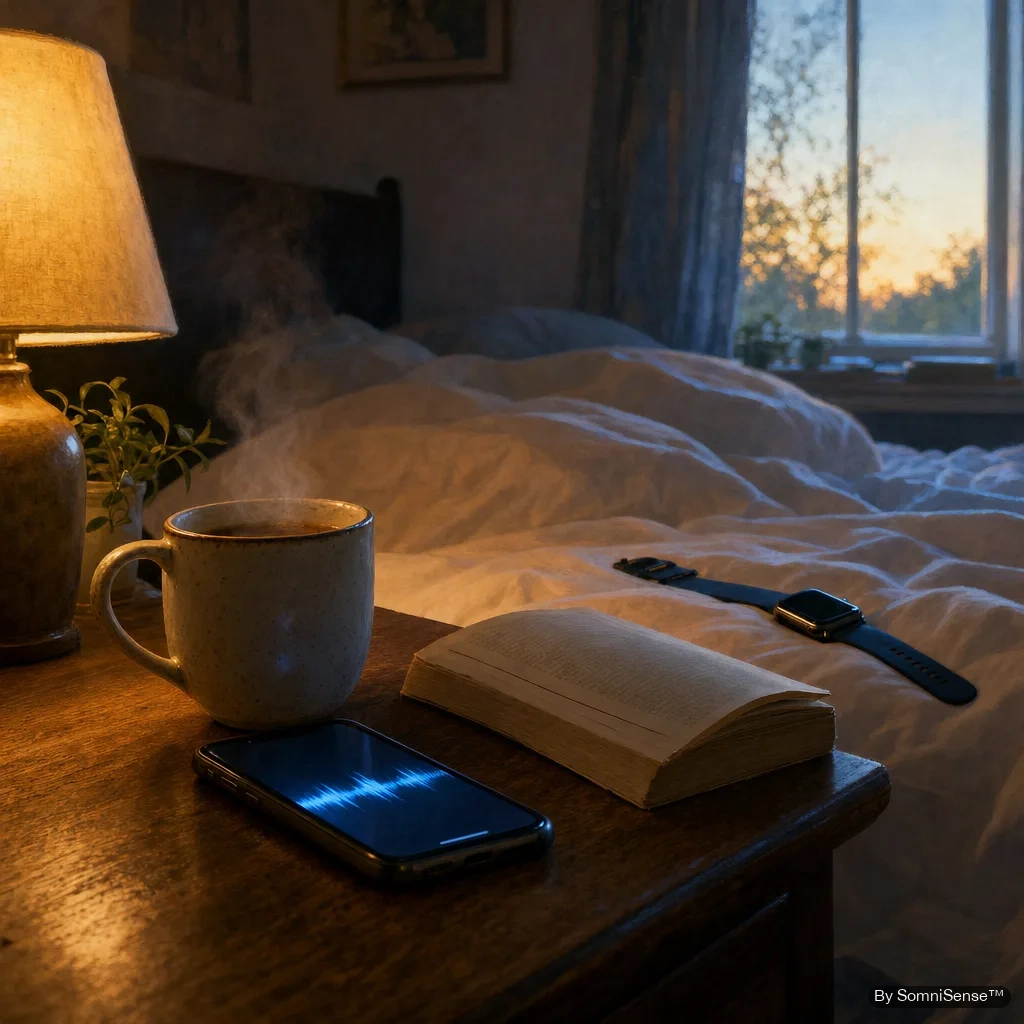
I get this question often enough that I want to write the long version of the answer.
"My wearable already gives me sleep and breathing information. What would I learn from a separate phone recording?"
The answer depends on the product. Supported wearable features vary by sensor, model, software, region, and eligibility; a bedside phone adds a separate room-audio signal.

Contact sensors and microphones provide different inputs
Consumer wrist and finger devices use different combinations of supported sensors and algorithms. Their outputs may include sleep, movement, heart-related, temperature, breathing, or notification views, depending on the product.
Contact sensors and microphones observe different inputs. Some wearable ecosystems also support microphone or companion-phone sound features, depending on the model and setup. SomniSense provides an independent bedside recording of candidate moments, not a claim that all wearables lack sound or breathing features. Neither record confirms a diagnosis.
This is not a criticism of wearable devices. It is a scope distinction: a phone microphone can add room-audio context, but it cannot reproduce the wearable's contact-sensor signals.
Different sensors answer different questions
Apple Watch, Oura, and other wearables use their own wrist- or finger-based signals to produce sleep, recovery, breathing, or notification views. Their supported features and eligibility can change by model, software, and region, so use each maker's current documentation for the exact claim.
A wearable result can be useful on its own. SomniSense does not need to declare it incomplete or wrong. The additional value is a separate acoustic record: where the phone model marked a candidate region, its estimated type and duration, the waveform, whole-night position, and any local audio available for review.
The two views are complementary. Agreement does not prove a cause, and disagreement does not establish that either product failed.
The whole reason I built SomniSense the way I did is that, after enough nights of being told "your sleep was disturbed" without knowing what disturbed it, I wanted to hear the disturbance. The data is more useful when you can verify it.
Why "we cover everything" is a hard product to build well
SomniSense deliberately stays narrow. It organizes possible breathing pauses in bedside phone audio so you can locate a candidate, inspect its waveform and listen before and after the marked interval. It does not try to reproduce a wearable's heart, recovery, fitness, or sleep-stage features.
That narrower task has an equally important limit: the phone does not measure airflow, blood oxygen, respiratory effort, EEG, or anatomy. The useful product choice is to keep the acoustic evidence detailed and its boundary explicit.
So which one should you use?
Both can be useful if you already have a wearable. Read the wearable within its own documented sensor and product scope. Read SomniSense as candidate phone-audio evidence. Neither view automatically explains why the other changed.
If you do not have a wearable, SomniSense can still create its limited phone-audio wellness record without additional hardware. A wearable remains a separate choice for the features its maker documents.
Read next
Record tonight. Take a closer look tomorrow.
Download SomniSense for iPhone or Android and start with Free. Your first Night Report helps you review what the phone recorded, including any candidate breathing moments. No candidates is a possible result too; it cannot rule out a medical condition.
Free covers the first-night core experience · Pro adds longer history, 30/90-day views, comparisons and fuller English reports