How accurate is a phone at this, really?
A phone microphone can support specific acoustic tasks. The honest answer requires task-by-task evidence, production boundaries, and more than one metric.
Read article →BLOG · WRITTEN BY THE TEAM, NOT A CONTENT FACTORY
Plain-English articles on sleep breathing, phone-audio observations, validation, privacy, and where a wellness record stops. No "10 sleep hacks." Each article is designed to be read in a few minutes.
START WITH YOUR QUESTION
Start with the terms SomniSense uses and what your nightly patterns can — and cannot — tell you.
Explore this topic →Understand phone-based tracking, validation, and how your recordings stay under your control.
Explore this topic →Learn how tagged and untagged nights can be compared without turning an association into a causal claim.
Explore this topic →Learn why different sleep products measure different signals and should not be read as equivalents.
Explore this topic →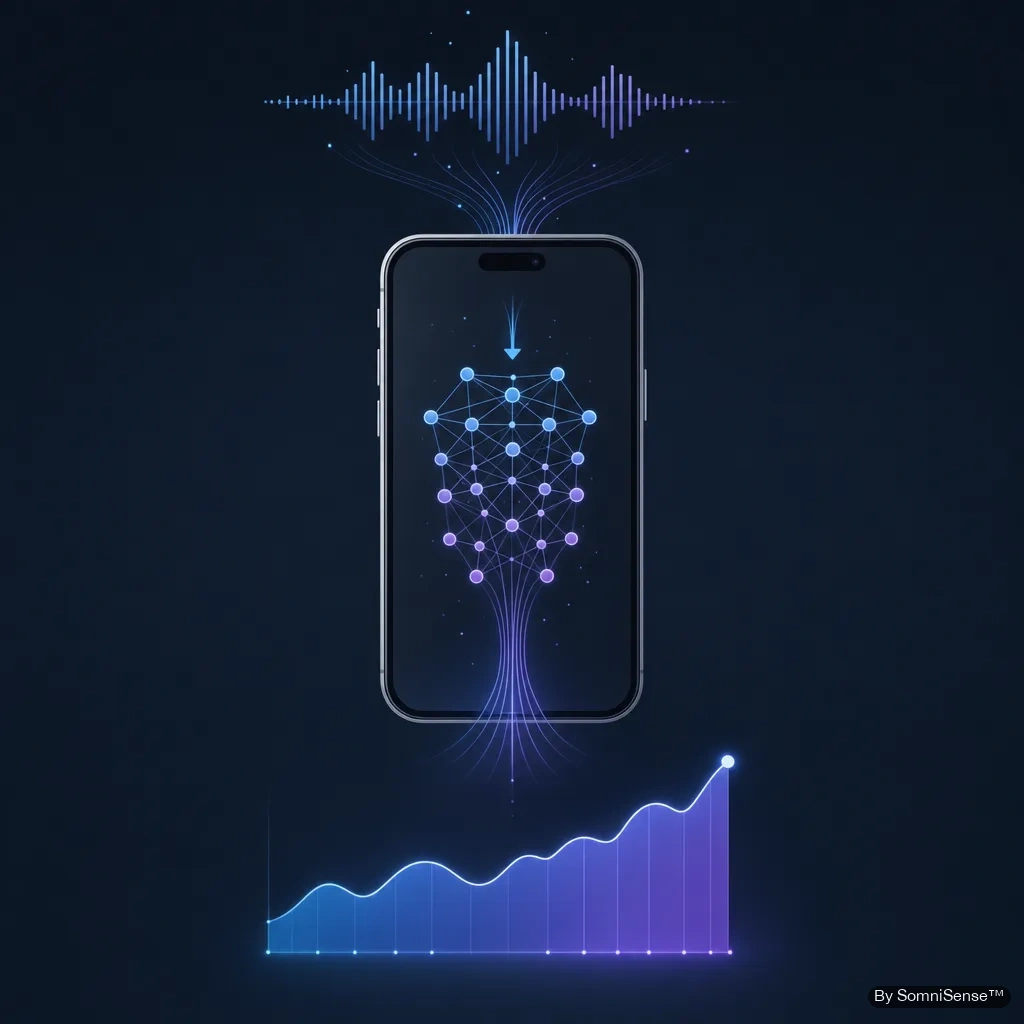
A phone microphone can support specific acoustic tasks. The honest answer requires task-by-task evidence, production boundaries, and more than one metric.
Read article →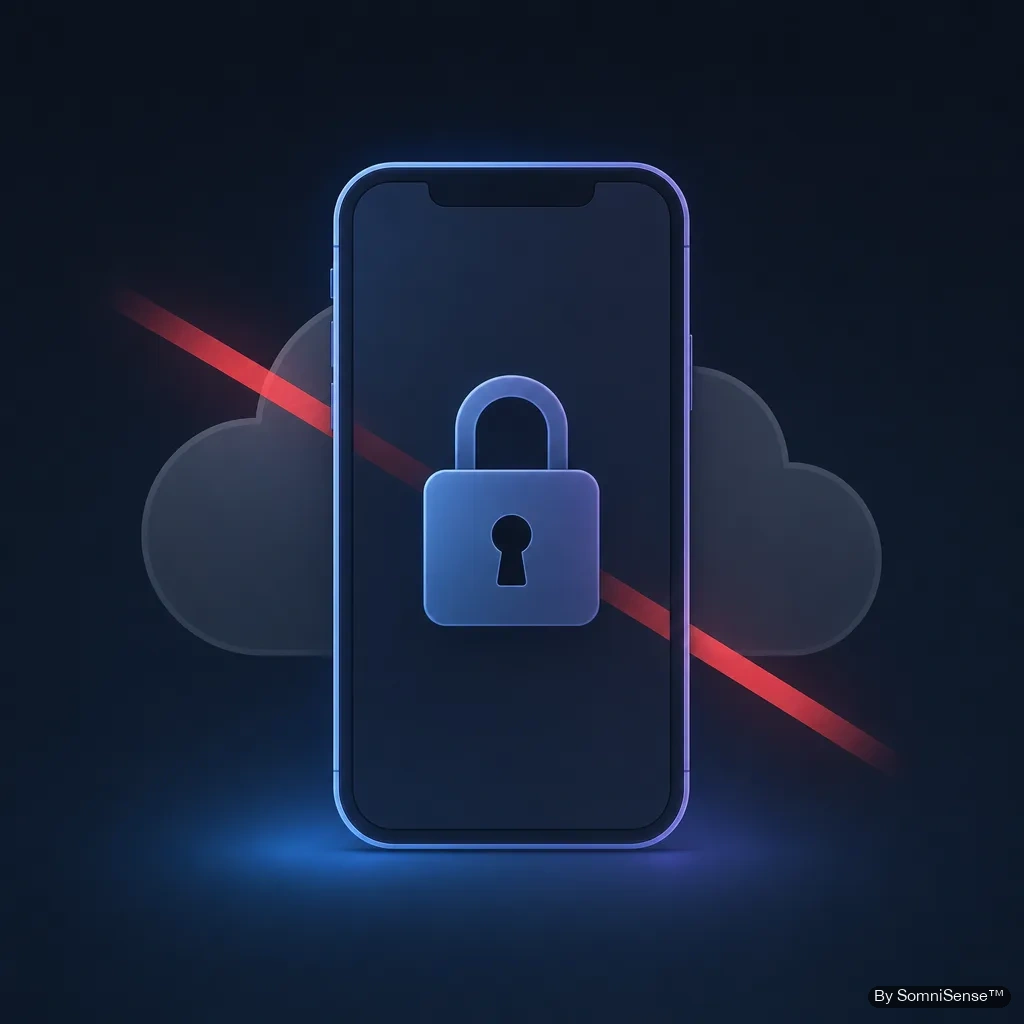
Sleep audio is analyzed on your phone and is not uploaded by default. Learn how explicit sharing differs from the account, aggregate and technical data used for the service.
Read article →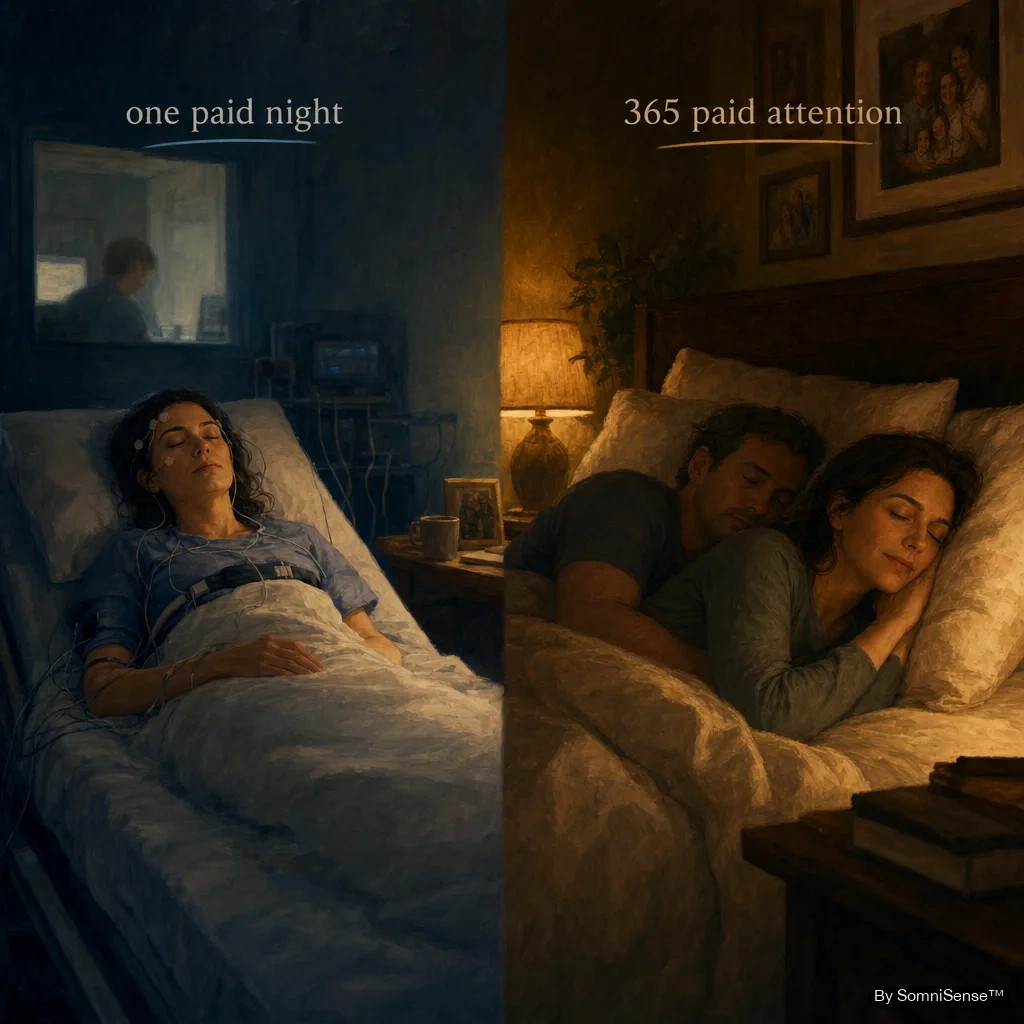
A validation claim is only useful when it names the task, dataset, reference, and limits. Here is how to read that evidence in plain language.
Read article →
A personal tag can organize nights for comparison. It cannot establish safety, efficacy, sleep-stage effects, or a biological mechanism.
Read article →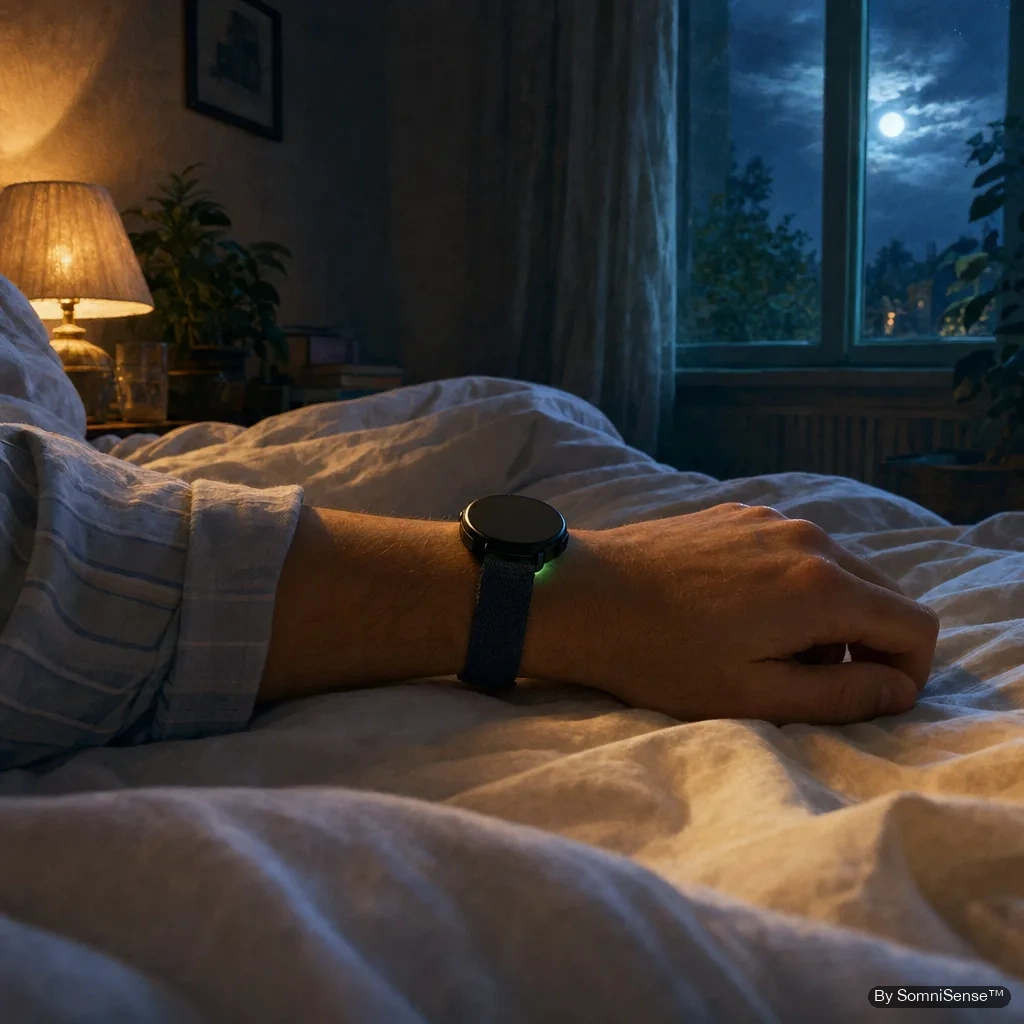
Apple Watch estimates REM, Core and Deep sleep. Learn what those stage estimates show and why a separate phone-audio candidate cannot explain or verify them.
Read article →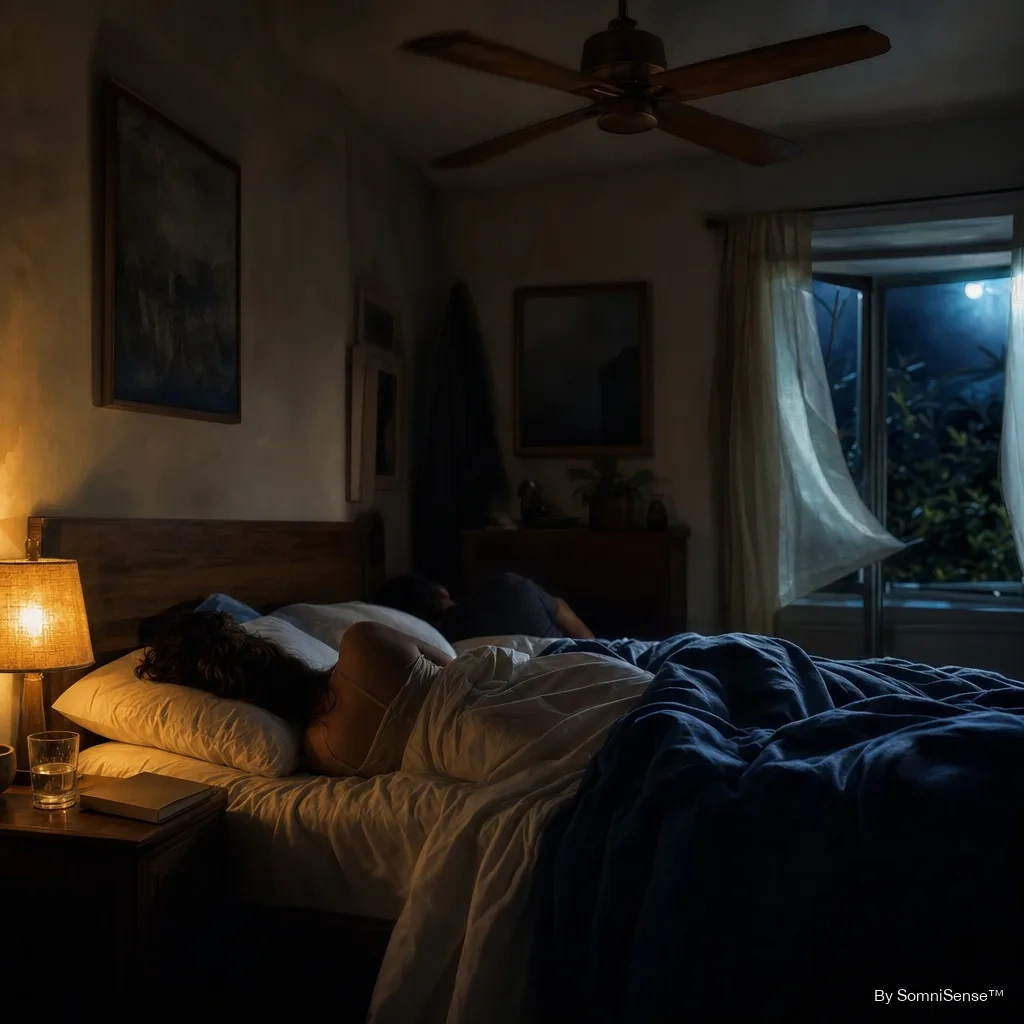
Room conditions and routines can be useful tags. A phone-audio record can compare nights, but it cannot identify temperature, cortisol, or a mechanism.
Read article →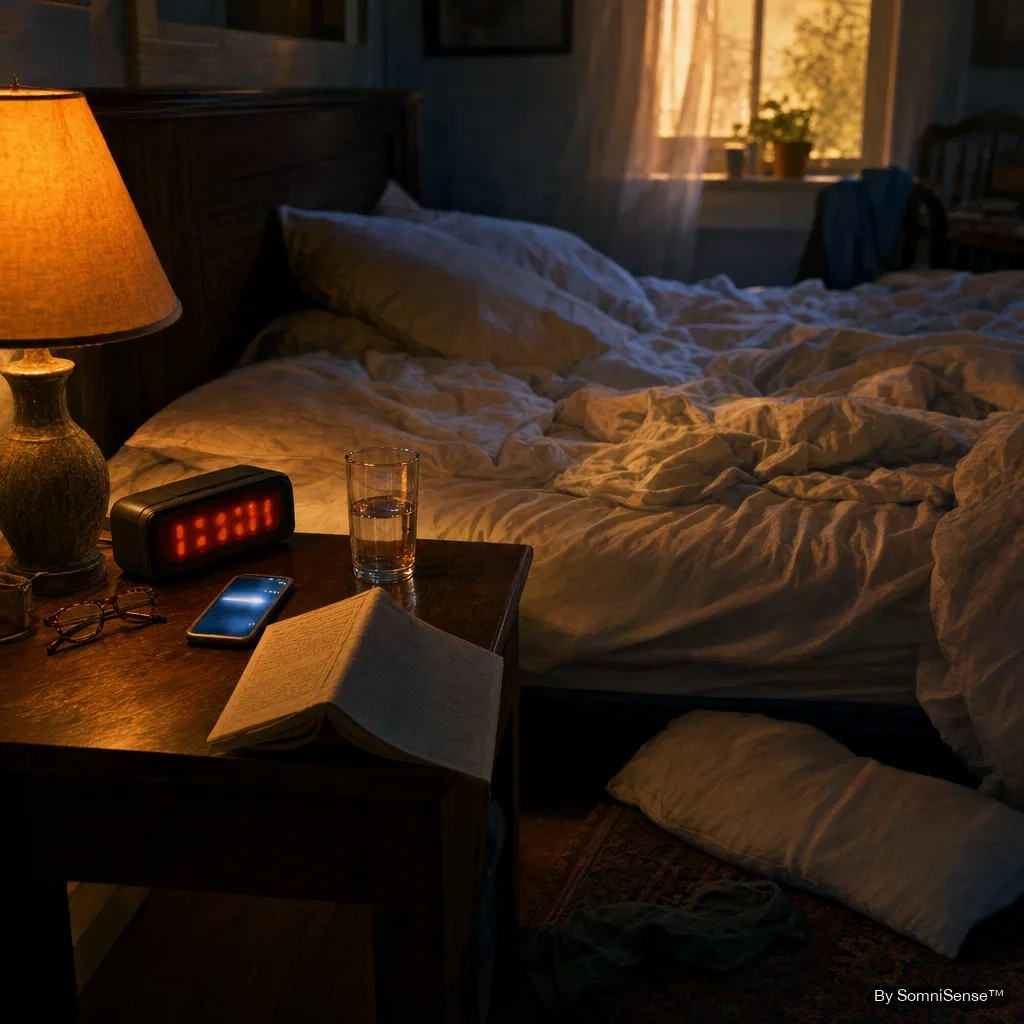
Time in bed and how you feel in the morning are different observations. A multi-night sound record can add context without identifying the cause.
Read article →
Weekday and weekend nights may differ. Repeated observations can show a pattern, but a tracker should not assign the cause.
Read article →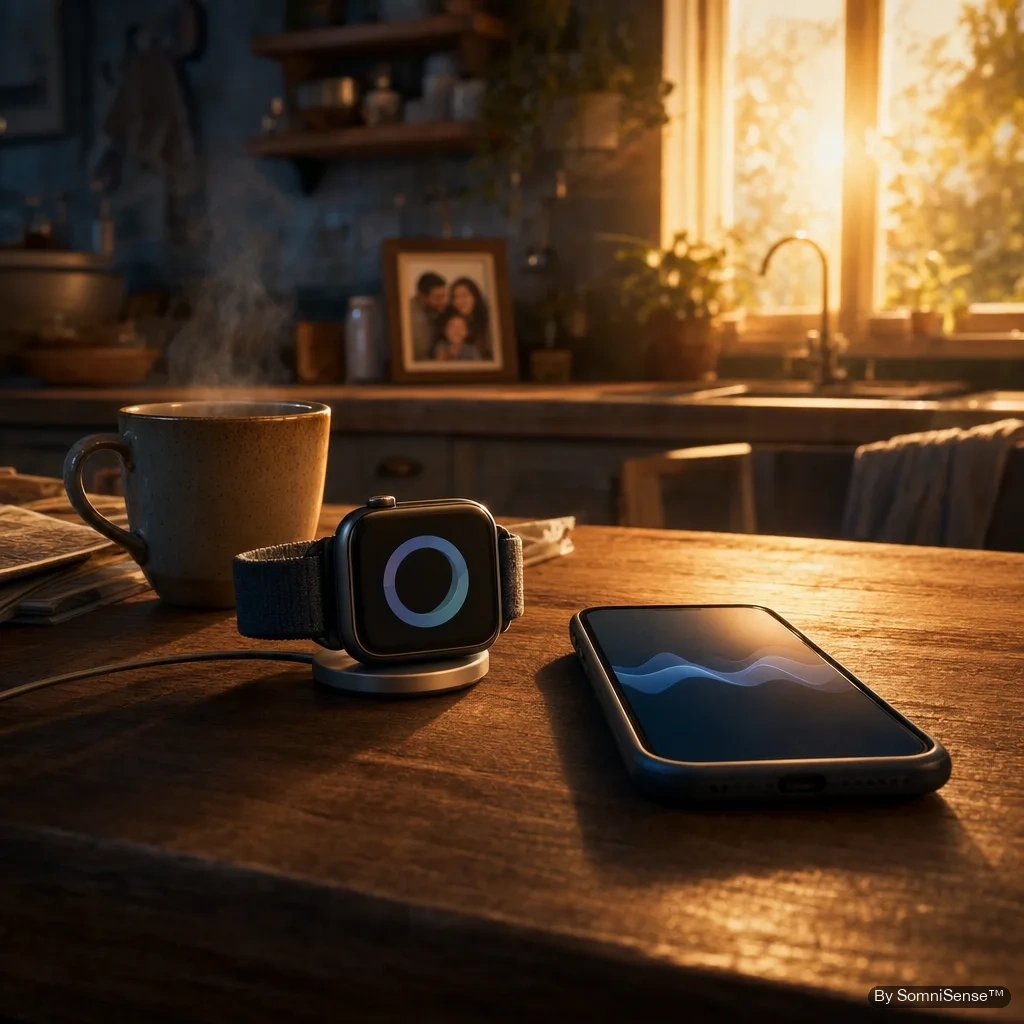
A watch score and SomniSense candidate acoustic-event rate are not equivalent measures and should not be used to validate each other.
Read article →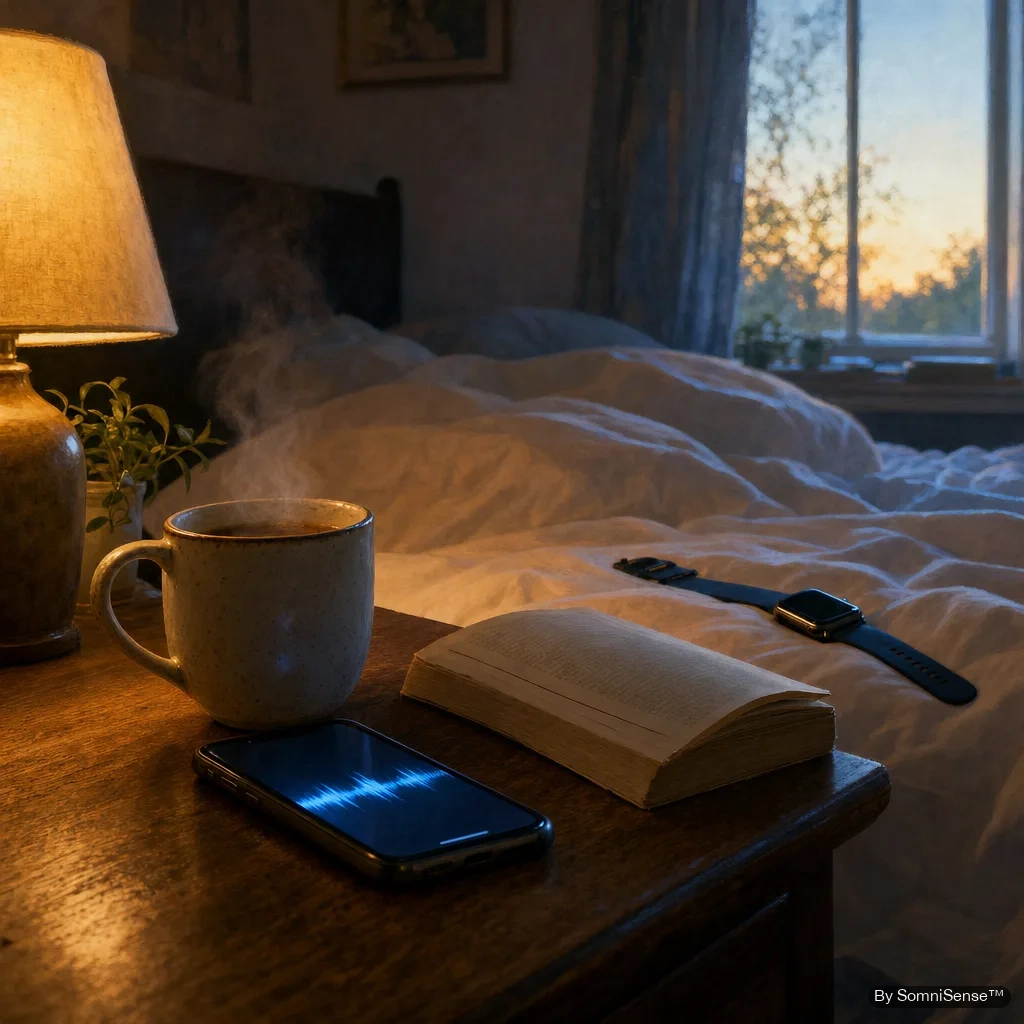
Wearable sleep, breathing and sound features vary by model and companion-phone setup. See what an independent bedside recording can add without using one result to explain the other.
Read article →
A wine tag can help compare nights. A phone-audio record cannot establish sleep quality, sleep-stage effects, or causation.
Read article →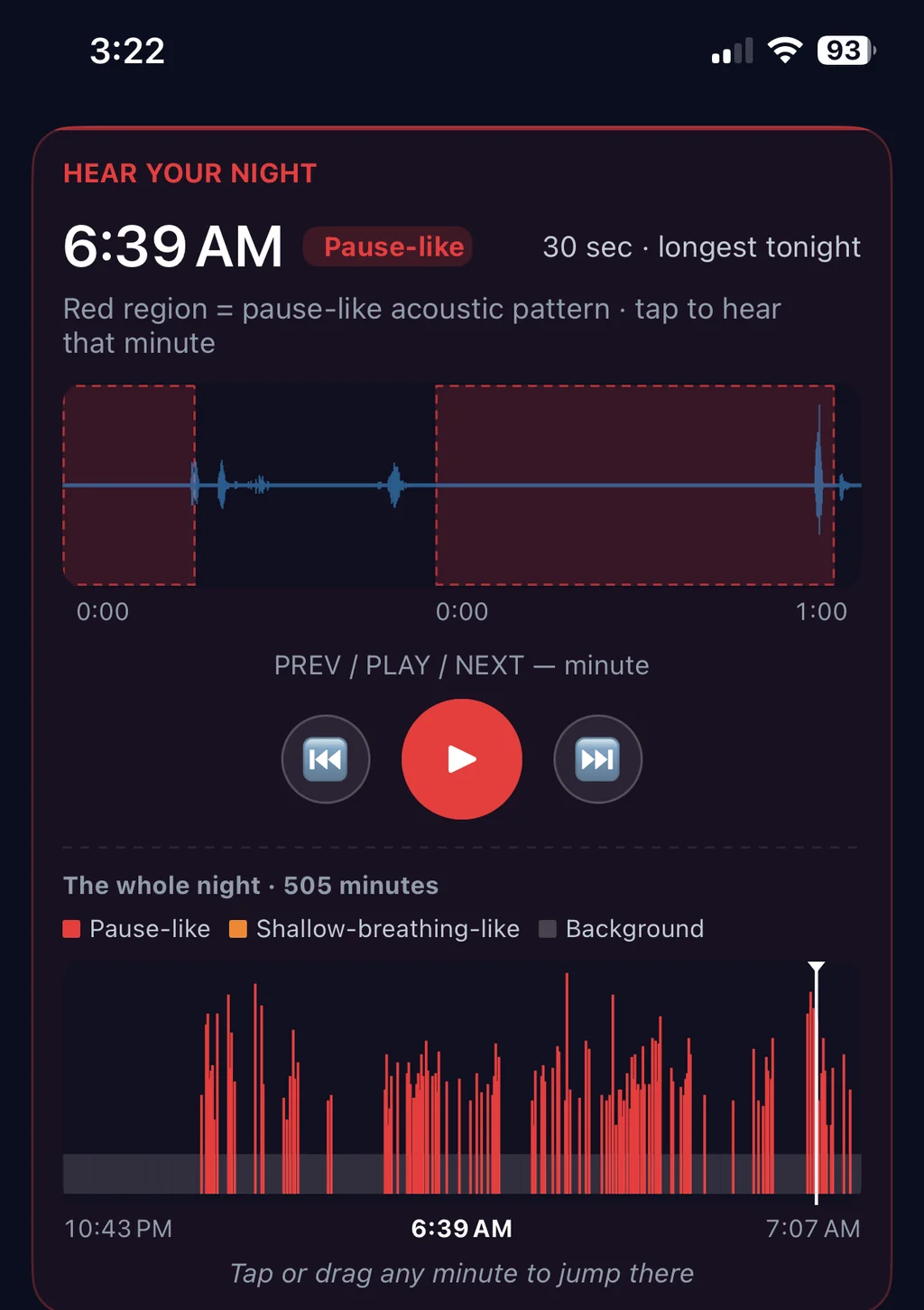
BRI is SomniSense's product-defined rate of candidate acoustic patterns per estimated sleep hour. It is not clinical AHI.
Read article →
A plain-English guide to common symptoms, why they are not specific, when professional evaluation matters, and what SomniSense cannot determine.
Read article →