WITH · APPLE WATCH NOTIFICATION
Apple Watch Sleep Apnea Alert: What Comes Next?
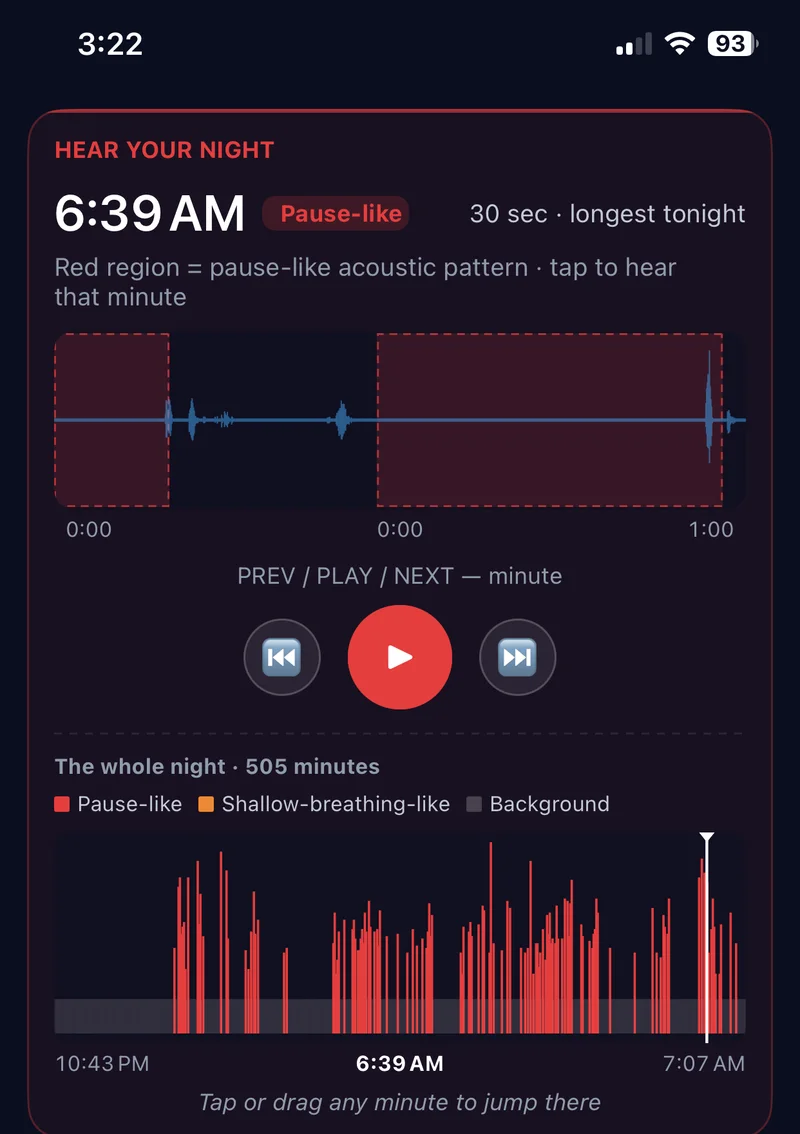
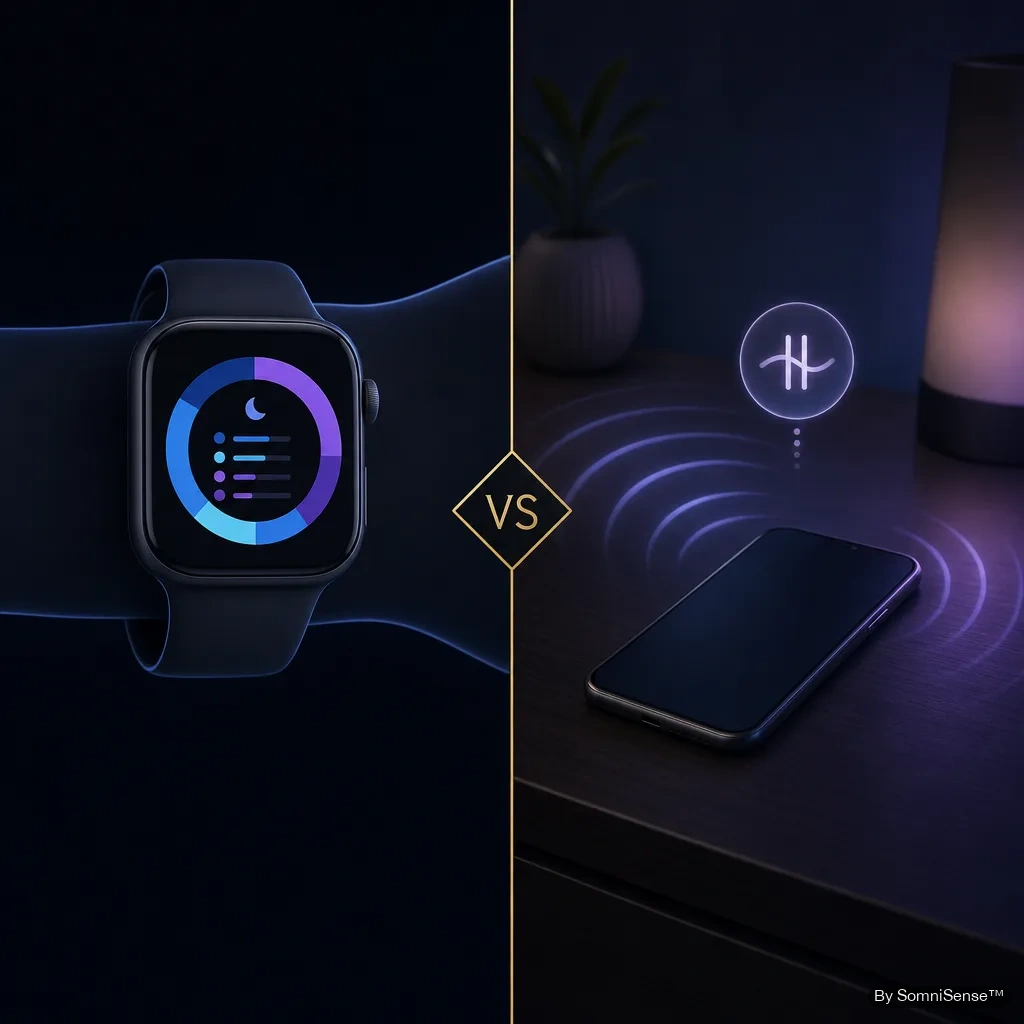
An Apple Watch sleep apnea notification is a reason to discuss the finding with a clinician. Its motion-based breathing-disturbance assessment has a different role from phone audio. SomniSense adds an independent recording with marked candidate times, waveform and surrounding sounds. Compare dates manually; it does not import, verify or overturn your Watch notification.
Apple Watch uses its accelerometer to identify wrist movements associated with interruptions in normal breathing, then evaluates the pattern over a 30-day period. If you received a notification, follow Apple's guidance and speak with a qualified clinician. SomniSense cannot confirm or dismiss that notification.
What the notification actually means
Apple describes Breathing Disturbances as interruptions in the normal respiratory pattern that Apple Watch estimates from small wrist movements during sleep. The Health app can show whether a night's breathing disturbances were elevated or not elevated.
For the notification feature, Apple evaluates those disturbances over a 30-day period. A notification indicates signs consistent with moderate-to-severe sleep apnea and includes a report you can share with a healthcare provider. It is a prompt for follow-up, not a measurement of airflow and not a diagnosis.
Three limits that matter
- It is an indirect signal. The feature uses wrist movement associated with breathing interruptions; it does not directly measure airflow, respiratory effort, or brain activity.
- A quiet Watch is not a clinical clearance. Apple says not everyone with sleep apnea receives a notification.
- Availability and eligibility vary. Supported models, software, age requirements, regions, prior diagnosis status, and setup requirements all matter. Check the current Apple Support page for your device.
These limits do not make the notification unimportant. They define the correct response: take it seriously enough to follow up, without treating the Watch as the final diagnosis.
Your next steps
- Open the notification in Health. Review the breathing-disturbance history and export or save the report Apple provides.
- Write down symptoms and context. Include witnessed pauses, gasping, loud snoring, daytime sleepiness, blood-pressure concerns, and how long the pattern has been present.
- Contact a qualified clinician. Ask what evaluation is appropriate for you. Do not delay urgent care if symptoms feel severe or immediate.
- Keep prescribed care unchanged. Do not start, stop, or adjust treatment based on SomniSense or a consumer wearable without clinical guidance.
What the sound layer can and cannot answer
| Question | Responsible answer |
|---|---|
| Can I review what the microphone captured? | Yes. Play the recorded context around a candidate and follow its waveform. Recording quality, access and retention limits apply. |
| Does a red region prove breathing stopped? | No. It is a model-estimated acoustic candidate region. |
| Is BRI the same as clinical AHI? | No. BRI is a SomniSense product metric; it is not AHI. |
| Can SomniSense rule sleep apnea in or out? | No. Diagnosis requires an appropriate clinical evaluation. |
Free basics stay available · No additional hardware to buy or wear · Wellness observations, not a diagnosis.
Primary source
Apple Support — Sleep apnea notifications on Apple Watch. Apple controls feature details and availability; check its current page for your model, region, and software.
Read next
Common questions
- What does an Apple Watch sleep apnea notification mean?
- On supported devices and in supported regions, Apple Watch evaluates breathing-disturbance data over a 30-day period. A notification means the pattern showed signs consistent with moderate-to-severe sleep apnea. It is not a diagnosis; Apple directs users to discuss it with a healthcare provider.
- Can Apple Watch be wrong?
- Any screening or notification feature has limits. Apple explicitly says the feature is not intended to diagnose sleep apnea and that not everyone with sleep apnea receives a notification. Do not use either a notification or the absence of one as a final answer.
- What should I do after a notification?
- Follow the instructions in Apple Health and arrange a conversation with a qualified clinician. Bring the notification report and a symptom history. A separate SomniSense wellness record can add acoustic context, but it cannot confirm or dismiss the Watch result.
- What if I have symptoms but no notification?
- Apple states that not everyone with sleep apnea receives a notification. Witnessed pauses, waking up gasping, persistent daytime sleepiness, or other concerning symptoms still deserve clinical discussion even when the Watch is quiet.