WITH · OBSERVATIONAL TAG COMPARISON
Compare nasal-strip-tagged and untagged nights.
SomniSense shows the observed difference and sample sizes between tagged groups. It does not determine whether the strip worked or caused a change.
Record comparable nights and tag when you used the strip or clip. Review candidate acoustic regions, locally available audio, and group averages without treating the result as a treatment-effect estimate.
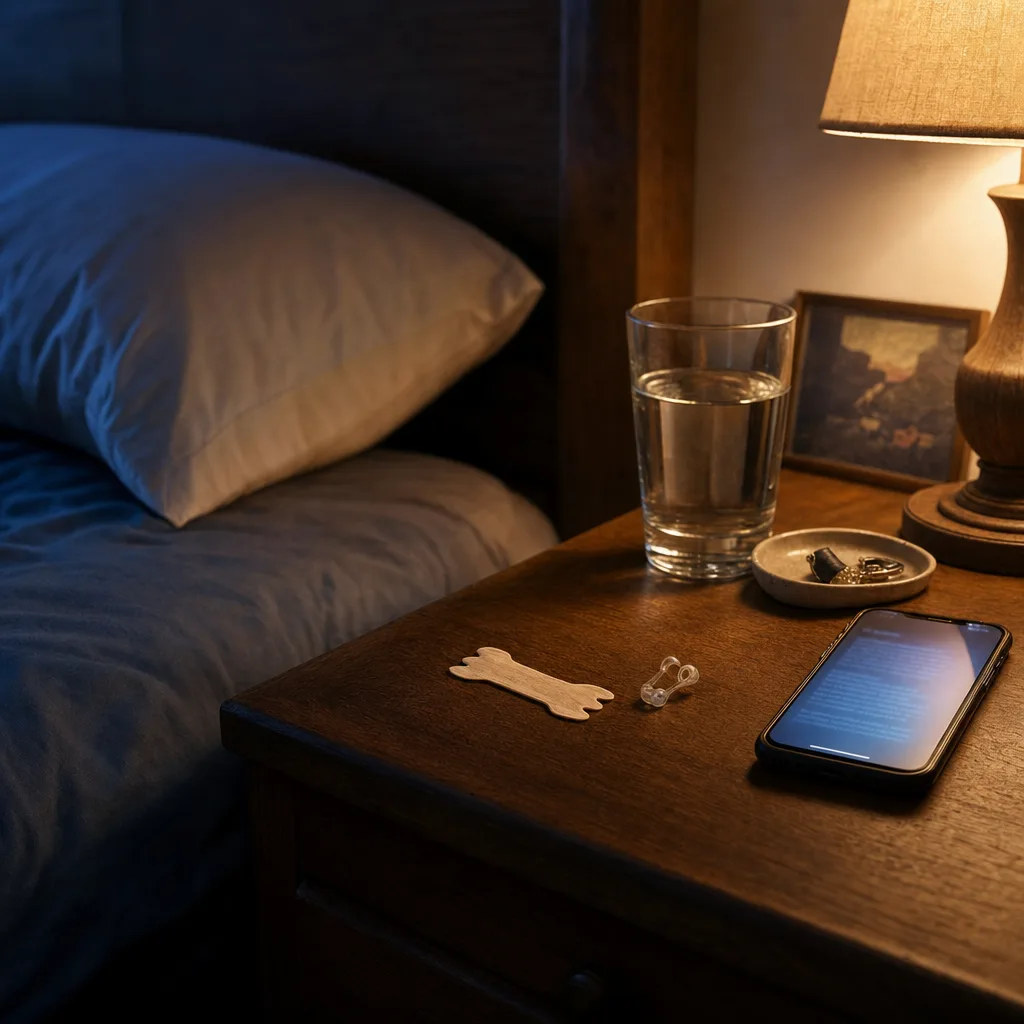
Separate the product tag from the conclusion.
A nasal-strip tag records your reported use. SomniSense does not verify use, identify the anatomical source of a sound or determine whether the product addressed it.
Its job is narrower: preserve candidate acoustic evidence from each night and show the observed tagged and untagged group averages with their sample sizes.
How to compare the nights you tag
- Review existing tagged and untagged nights. An untagged night is missing that label; it does not prove the product was not used. Do not alter product use to create a comparison.
- Keep observations descriptive. Use a distinct tag for a product you already chose to use, and preserve differences in phone position and room conditions.
- Compare groups, not one night. More comparable nights add context, but do not establish efficacy.
- Interpret cautiously. A difference or no difference may reflect normal variation and other factors.
We don't sell or score the strip.
SomniSense does not make strips or take affiliate revenue from them. It organizes observations around your tags; it does not validate the product.
Keep the observed difference with its sample sizes and recording context. It is not a reason to rotate products, and it cannot establish the safety or effect of a nasal strip.
Free includes candidate evidence and local playback within the app limits. Pro adds unlimited playback, longer views, factor comparison, and the fuller structured report.
Read next
Common questions
- Can SomniSense tell me whether a nasal strip worked?
- No. It can compare acoustic observations from strip-tagged and untagged nights, with sample sizes. That personal comparison is not a treatment-effect estimate.
- What about internal nasal dilators or clips?
- Use a distinct tag for the product you tried and keep the phone setup comparable. Do not combine different products into one tagged group.
- I feel like I breathe better with a strip. What can the record add?
- Nasal comfort is a useful subjective observation. SomniSense can separately show what its microphone captured on tagged and untagged nights; it cannot identify anatomy or explain why the groups differ.
- Do you sell strips or recommend a brand?
- No. SomniSense does not make strips or take affiliate revenue. It organizes observations and does not recommend or validate a product.