WITH · OBSERVATIONAL TAG COMPARISON
Trying a snoring change? Compare tagged and untagged nights.
Keep the phone setup comparable, tag what you tried, and review the observed group averages and sample sizes. The comparison can reveal a repeated association; it cannot determine treatment effect.
Nighttime observations vary. Review tags describing routines or products already used, then compare existing nights with similar recording conditions. SomniSense shows group differences and sample sizes; it does not recommend products or tell you that a treatment worked. Do not change prescribed care to create a comparison.
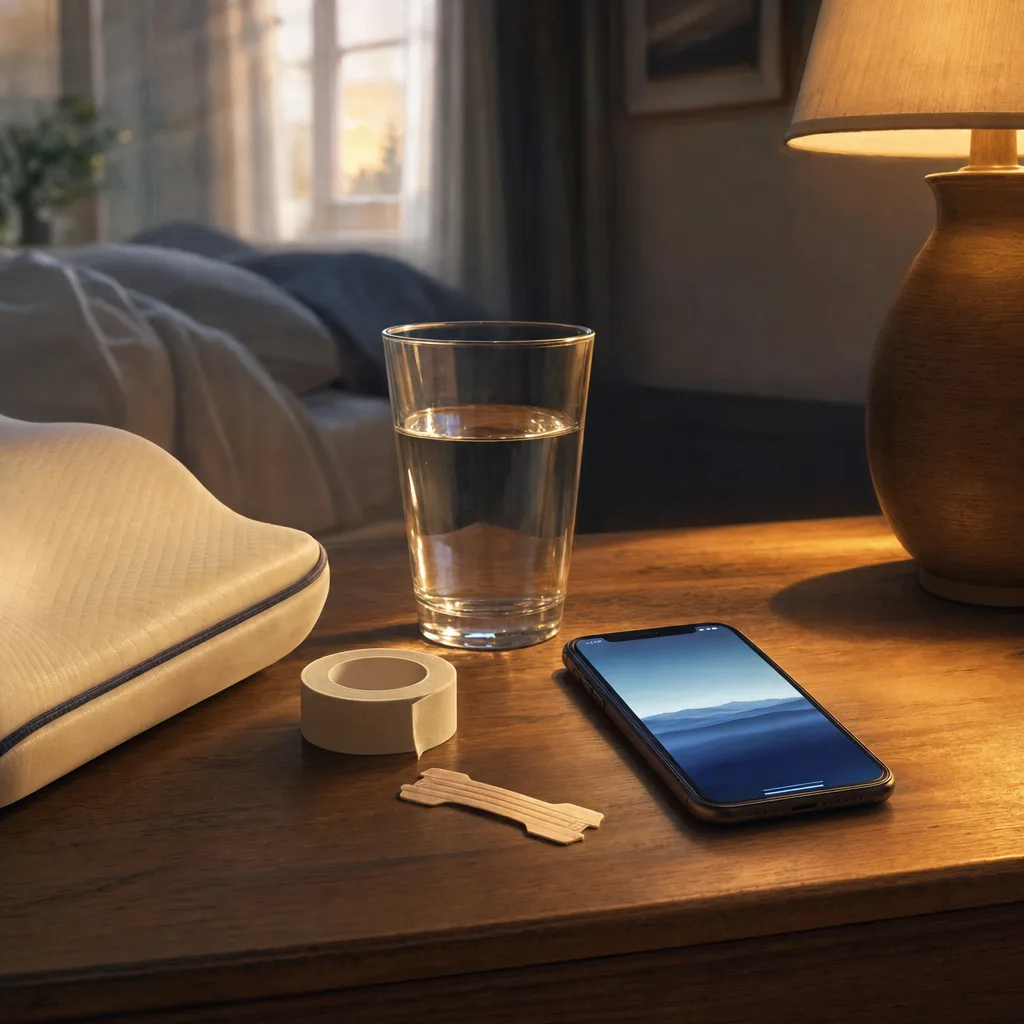
The useful question is whether an observed difference repeats.
A pillow, tape, side-sleeping, or another routine may coincide with a different acoustic night. One night cannot separate that tag from ordinary variation, setup differences, adherence, or other unrecorded factors.
Use comparable groups to describe what lined up with higher or lower readings. Keep the conclusion observational: “the tagged group had a different average,” not “this fixed my snoring.”
Pick one tag and keep the setup comparable.
Start with observations already in your record. Each guide explains how to interpret the tags without recommending a product or changing care:
The measurement is the constant
You do not restart from zero every time you try something new. Continuous recording and tags let Lifestyle Lab™ compare groups in the same personal record.
Interpret the output as “these tagged nights had a different observed average,” not “the pillow did nothing” or “side-sleeping dropped my number.” Normal variation, adherence, and other factors can contribute.
We don't sell or grade the intervention.
SomniSense does not make these products or take affiliate revenue from them. It keeps observations and tags in one record so you can compare nights while preserving the limits of an uncontrolled personal dataset.
Free includes candidate evidence and local playback within the app limits. Pro adds unlimited playback, longer views, factor comparison, and the fuller structured report.
Read next
Common questions
- Why compare several nights instead of relying on how one night felt?
- Snoring and candidate acoustic patterns vary from night to night. Comparable tagged and untagged groups show the observed averages and sample sizes; they do not prove whether a change worked.
- How does it compare nights with and without one tag?
- Lifestyle Lab™ compares nights carrying one tag with nights missing it, with sample sizes shown. A missing tag does not establish nonuse of a product or routine. The difference is an observation, not a comparison of treatment effects.
- Do I have to buy anything to start?
- No. Free keeps snoring, core first-night candidate evidence, local playback within the app limits, and a recent 7-day trend. Pro adds longer continuity and fuller comparisons and reports; no additional monitoring hardware is required.
- Do you sell any of these products, or recommend one?
- No. SomniSense does not make pillows, tape, or gadgets and does not take affiliate revenue from them. It organizes tagged and untagged acoustic observations; it does not grade a product or treatment.